
Google Image Search
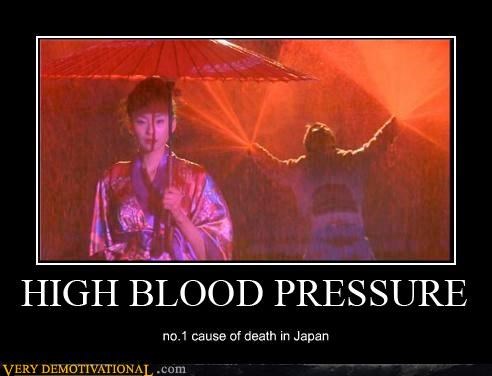
I was watching a show, which was rather good. The name was ‘Almost Paradise’ and it was a crime show with some comedy. The main character goes to a tropical island because he suffers from high blood pressure. This means he can’t continue being a DEA agent until he gets the condition under control. You can figure out the rest, but I want to focus on the high blood pressure.
Now, I had and still have hypertension. This is something that doesn’t have symptoms, but can still kill you. In the show, the hero has a few episodes where his BP tracker goes off and he gets physical symptoms. Fatigue, sweating, dizziness, and basically what you would expect from an anxiety disorder. These two conditions can go hand-in-hand, but it felt like it was focusing on the hypertension as the culprit. There was some talk of everything stemming from PTSD. Yet, the show really pounded on the hypertension for the first season. Not a bad thing since it made it unique. Just kind of strange that it was being exaggerated.
This seems to be common in fiction too. You take a condition and push it either to its real extreme or an exaggerated version. I saw this done a lot with autism way back. A child with autism would always be constantly screaming at the top of their lungs with no way to calm them down. They’d get triggered by lights, sounds, and other environmental things as if they’re just a bomb waiting to go off. Now, this can be possible, but it was used as the standard, which colored people’s opinion of autism. For many, they wouldn’t believe a person had it unless they were like this. So, you can see how exaggerations in fiction can be harmful here.
Is it inevitable though? I think you can’t really avoid some exaggeration. Authors introduce these conditions for flavor and need to make them count. There has to be moments where they pose a problem, so you can’t have them be benign for the entire story. Otherwise, readers won’t really care or believe. This would be causing the opposite issue of downplaying. An author could even downplay it to the point where they forget and have the character take actions they wouldn’t do. For example, a person with asthma running after an enemy and never having breathing trouble. Again, these are added to be part of the character, so they need to come up and that might require a small level of exaggeration.
An issue or cause for this could be lack of research. Many times, we think we know about these conditions or do a surface search for information. Get the general idea and off we go thinking we can utilize it. Doesn’t always work out that way because there’s always some nuance, especially in health situations. This is really true for the stuff we hear about all the time like hypertension, diabetes, asthma, insomnia, etc. Commercials and stories use these so often that we think we know about them. Yet, we could be falling for another author’s exaggerations. Kind of like a cycle if you think about it.
I don’t know if I’ll ever try it. Part of the reason is because fantasy brings up the question of ‘why they exist’. A world like Windemere is high magic, so you’d thing asthma, allergies, and hypertension would be easily cured. Can’t say I’d disagree with that. Other ailments would arise like curses, which I will play around with. Yet, the real world ones can be tricky. If I did use one, I’d have an exaggeration issue because I’d start looking for reasons to bring it to the forefront. I’d have to justify including it in the character and that could lead to overcompensation.
What do you think about the use of medical conditions in fiction and their exaggerations?




 Legends of Windemere
I’ve used medical conditions in my books, but I have a background in medicine, so it’s natural. However, I also need to do a LOT of research to make sure what I write is accurate. As for medical conditions in fantasy, unless it’s visible like a club foot or such, I can’t see it!
LikeLiked by 2 people
I think fantasy should use more internal diseases. It’s like they don’t exist in some worlds.
LikeLiked by 1 person
Good point!
LikeLike
That’s a tough one. Hypertension is hard to depict because viewers don’t usually see the results onscreen. I take medicine for hypertension. But people looking at me wouldn’t know I have it unless I tell them. So I guess the writers feel they have to exaggerate it to remind the viewers of the condition.
I usually see people diagnosed with OCD on TV (like the Monk show). While what was depicted seemed exaggerated, the show helped me to see what people might be going through. And the show’s writers seemed to have done some great research instead of using hearsay or their own opinion to write the show. I’m glad you brought this up, because I haven’t dealt with any medical conditions like the above. I’ve only dealt with wounds. 😊 But now I need to give some thought to how to handle these conditions.
LikeLiked by 1 person
Hypertension doesn’t usually have visible symptoms too. Invisible conditions always have an extra wrinkle. OCD is a big one in fiction. Autism too. They’re usually the big, easily noticed versions.
LikeLiked by 2 people
I think medical conditions can be part of a good story if done well. I don’t think exaggerations belong. Your example of high blood pressure producing symptoms doesn’t ring true.
LikeLiked by 2 people
Yeah. It was weird to see. Only parts that made sense was the BP sensor going off in stressful situations.
LikeLiked by 1 person
Sounds weird.
LikeLike
This is a toughie, because authors do need a way for their characters/book to stand out, and they might hit on a medical condition as a way to do that. Some of us might think that kind of thing would give them an edge against the fierce competition. In itself that isn’t even blameworthy.
But authors do need to be respectful and realistic. I’d think they need to have some framework of support, whether that means sensitivity readers or going through material from a special interest group (ie: the Alzheimer Society if a character is going to have Alzheimer’s).
I also think it matters how important the condition is to the over all plot. You wouldn’t go into as much detail about a side character’s anxiety (another condition I’m seeing a lot recently) as you would for the main character.
LikeLike
Anxiety is a big one. I’m seeing people become more realistic with that, but the extremes still happen. One thing for all medical conditions that tends to get ignored is the crushing fatigue. It may show up for a bit, but not like it is in real life.
LikeLiked by 1 person
Maybe that’s because fatigue is a personal sensation, not something visible from the outside.
LikeLike
I don’t know. Coworkers and friends can tell when I’m fatigued. You move slower, thoughts come out fractured at times, face is off, dizziness, lack of stamina, and more. That’s what I’ve learned from my covid and long covid bouts anyway.
LikeLike
I’m going to say it depends. How rooted in the real world is the story? In a murder mystery, or a cute romance, it should probably be well researched and grounded. I don’t write stories like that and see it as a useful tool. One thing I try never to do is diagnose the symptom. I believe that gives me more leeway for exaggerations.
LikeLike
I think even fantasy needs to be true if using real world diseases. For example, Alzheimer’s shouldn’t be a totally different disease. That’s why I prefer to make up my own illnesses.
LikeLiked by 1 person
That’s why I try not to label it. Symptoms, yes. A name someone can diagnose and add their comments to, no.
LikeLike
How well does that work?
LikeLiked by 1 person
Seems to have worked pretty well in my last solo novel.
LikeLike
In one of my historical novels, I had a character die of stomach cancer. I researched the symptoms, but had some trouble in how it would be treated, or even thought about, in the 9th century. Would it be treated in a similar way to indigestion?
Similarly with TB, which another character had, and a broken leg in the earlier book, set in the 1st century. Nearly all information I found was about present day cures.
As to exaggerating, I hope I didn’t do it. There are bound to be people who know more about these things, and it will grate on them.
LikeLike
I’m surprised there isn’t much information on how diseases were treated in the past. Would they know about stomach cancer?
LikeLike
I made an assumption they wouldn’t really understand what was going on and had my protagonist treat him with a variety of herbs that she knew helped with digestive problems.
LikeLike
Good conversation! A classic that comes to mind is Dostoevsky’s The Idiot, in which the protagonist has seizures. This wonderful writer had seizures, ascribed to temporal lobe epilepsy. Though I’ve never lost my sight, In a fantasy novel, I wrote about a character who loses then regains his sight. Writing this was something I enjoyed.
LikeLiked by 4 people
That has to be difficult to write. Just from the psychological side, there’s a lot going on with vision loss and regaining.
LikeLiked by 1 person