
Google Image Search
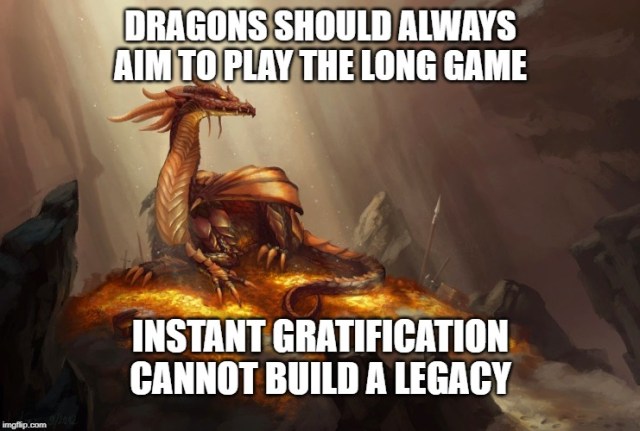
One of the hardest things to do with a series is to have a message. This is because you need to play the long game. I mean, you can’t just have it be revealed in the first volume and then never challenged. It needs to appear gradually and be at risk of changing since this is typically about morality or the like. So, what do you do?
- Do not make the messaging your focus when you begin writing the first volume of a series. This can distract you from the more important pieces such as world building and story foundation. If you’re paying attention to the message then you the rest can come off as week or convoluted. With it being so early in a story, you might not even want to introduce those types of themes. You can even start with more basic ones such as ‘good vs evil’ or ‘experienced vs rookie’.
- When it comes time to start pushing your message, you need to take your time and not let it absorb the whole story. Messages can be central themes, but they work best when they are not sucking all the air out of the room. Entertainment is fiction’s primary purpose and one can get points across through that. For example, a theme about friendship can be better suited to the character relationships, which are not the main story. They will change and grow as the adventure progresses, but they do so on a secondary level.
- Perhaps the easiest time to add parts for the messaging is during a rewrite or editing stage. The core story is already written, so you are now putting in the pieces that are lurking beneath. You can focus almost entirely on this during one run, which can result in shoring up scenes that feel empty.
- Two of the main sources of message portrayal are the personality and actions of the characters. To get your points across, you need them to speak and act accordingly. For example, if you want to show that power corrupts then you have to demonstrate with at least one character that the stronger they get, the darker they turn. Readers are supposed to connect to your characters, so this makes them the perfect vessels for messaging.
- DO NOT HAVE CHARACTERS SCREAM THE MESSAGE!
- As a series progresses, you can have themes and messages change. Revealing one early on gives you the opportunity to have it be challenged. For example, if you show that the story revolves around ‘good vs evil’, you can have good lose for a bit. Have a character develop a conflict of faith or turn because of a deep loss. Series allow you to extend and play with messages in a rollercoaster style instead of plopping them down and leaving them alone.
- There’s nothing wrong with juggling multiple messages in a long series. Some can be for the whole story while others are for a specific volume. You can even have a different message/theme being portrayed by different characters. This is where it ties into personality and action. Their storyline and background can help establish such things as well. Guess the main point here is that you can have several messages if you use your other set pieces carefully.





 Legends of Windemere
Great tips! Yes, messages need to be organic and not billboards. Otherwise, a story feels like a hollow shell–just there for the message. I understand that peope are anxious or weary or wanting to be understood. But good storytelling helps a message to be heard.
LikeLiked by 1 person
The weird thing is that there is a market for billboard message stories. Wonder if it’s because of shortened attention spans.
LikeLiked by 2 people
Probaby so. Maybe this goes with the trailers that seem to reveal more and more of the movies these days!
LikeLike
Great advice , Charles.
LikeLike
Thanks.
LikeLiked by 1 person
I always feel a bit uneasy when people start talking about a message, or a theme. Why does every book these days need to send a message? What wrong with simply telling a good story?
LikeLiked by 1 person
I think it’s more that people talk more about messages and themes these days. Nearly every book I’ve read had a message or theme, but they weren’t what people talked about. A part of this is probably the shift in ELA education where messages and themes are focused on more than story structure. Literature in school is now about what it can teach is about the world and not entertainment.
LikeLiked by 1 person
I find that sometimes themes just appear while drafting something. Grinders was like that for me. Going a few years into the future forced me to consider how some things might play out, both good and bad. I touched upon rising sea levels and included a Superfund clean up site, but it was for plastic manufacturing. I went into the future a short distance with “Swamp” and how we destroyed our world had to be included. Lanternfish was a fantasy trilogy, but fatherhood became a theme all on its own.
LikeLiked by 1 person
Messages and themes do seem to sneak into stories. I wonder if it’s a side effect of having a detailed world with multifaceted characters. To give those things depth, we might create ethical codes and histories that require philosophical thoughts.
LikeLiked by 1 person
I’d rather not plan them. If organic themes find their way in, so be it.
LikeLiked by 1 person
I usually start books (I usually write stand-alone) with a question or observation. For instance The Seven Exalted Orders began with people being controlled and how they tried to break free. My questions could be considered a theme, I guess.
Anyway, the question is built in from the start, and I present it as part of the plot. Yet I also leave room for the reader to have their own thoughts about the situation I present.
So theme is open and discussed all the way, without being shouted at the end.
LikeLike
Open themes always scare me as an author. I think because I have more faith in people to misunderstand me than get what I’m saying.
LikeLiked by 2 people
Amazing tips for the message to be heard as an authentic, thanks alot
LikeLike
You’re welcome.
LikeLike