
I was always fascinated by these birds as a kid because the males are very colorful. I grew up to see that their had a chuckle-inducing name: Cock-of-the-Rock. Both species are found in South America and are not threatened. Let’s just jump into the facts here:
- They are known primarily for the male’s disc-shaped, brightly colored crest.
- Andean Cock-of-the-Rocks are found in Venezuela, Colombia, Peru, and Bolivia. They are the national bird of Peru.
- Guianan Cock-of-the-Rocks are found in French Guiana, Suriname, Guyana, south Venezuela, eastern Colombia, and Amazonian Brazil.
- The family name is Rupicola. They get this from Latin for rock (rupis) and inhabitant (cola).
- They live in cloud forests, which are at 1,600-7,900 feet elevation.
- Both species have sexual dimorphism, which is when the males (brightly colored) and females (brown) look different.
- Males put on displays and duel for females in areas called leks.
- Males have multiple partners and do not help with nest-building or child-rearing.
- Females lay 2 eggs and incubate them for 28 days.
- A nest is shaped like a cup and held together by the female’s saliva.
- They eat fruits, insects, frogs, and small reptiles. They are one of the few species that will eat army ants.
Let’s check out some pictures and videos.

Andean Cock-of-the-Rock Female (From Wikipedia)
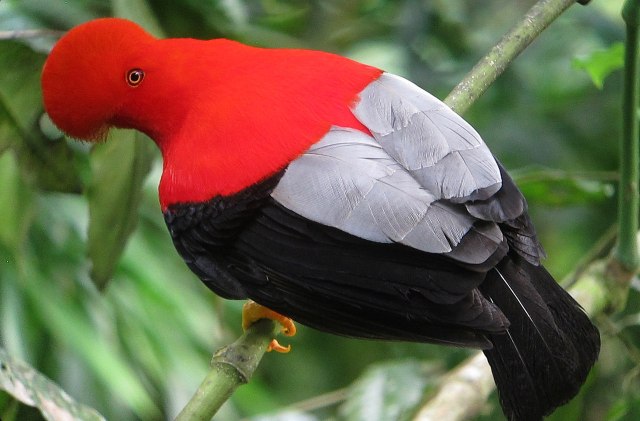
Andean Cock-of-the-Rock Male
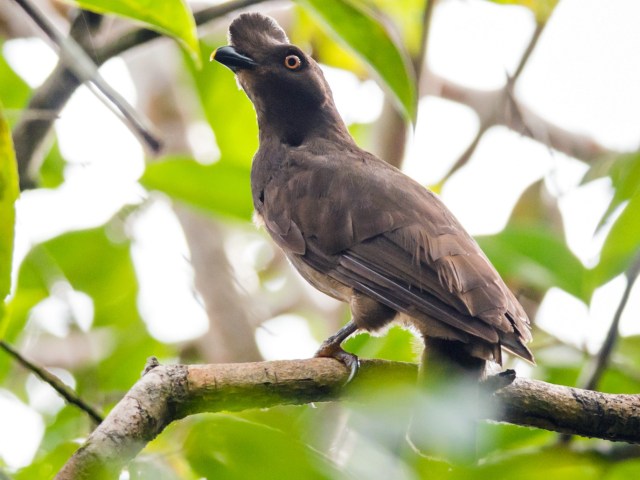
Guianan Cock-of-the-Rock Female
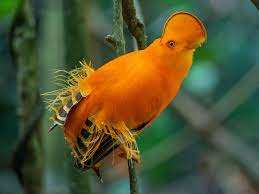
Guianan Cock-of-the-Rock Male





 Legends of Windemere
The Andean chap is very loud, but you probably have to make yourself heard in the forest. The first explorers to see them must have wondered if they had a head! Sounds as if the females don’t have such a colourful life…
LikeLiked by 1 person
Females being less colorful is pretty common among birds. I think they’re colored to blend into surroundings as they lay on the eggs. Probably gives them a higher chance at avoiding predators too. If you’re hungry for a bird, you’re more likely to notice the bright orange male than the brown female.
LikeLike
Pretty little guys, and kind of noisy when they need to be.
LikeLike
Just like toddlers. 😀
LikeLiked by 1 person
HA!
LikeLike
What gorgeous birds! My grandson would know immediately which were male and which female, as I’ve taught him that females are always less colorful. I think the males need their color to attract mates!
LikeLike
Yup. It’s all about getting attention from women. Doesn’t matter if it results in more danger too. Reminds me of human men showing off with dangerous stunts when they see an attractive woman.
LikeLike
We’re all animals! 😉
LikeLiked by 1 person
Reblogged this on Chris The Story Reading Ape's Blog.
LikeLike
Thanks for sharing.
LikeLiked by 1 person
What a hairdo!
LikeLike
They’ve got style.
LikeLike
What strange-looking birds. Poor females. Doing all the work.
LikeLike
That’s typical of birds. Poor males are born to be nothing more than breeders and predator bait. Don’t even get the camouflage of females for an edge.
LikeLiked by 1 person
Interesting little creatures! Lots of great info here!
LikeLike
Thanks.
LikeLike