
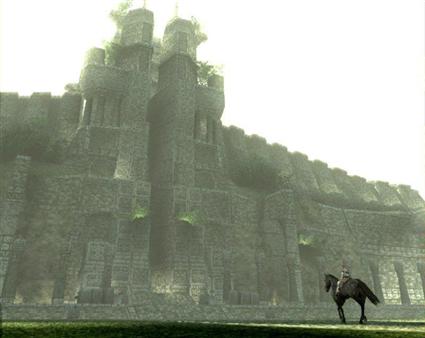
Shadow of the Colossus
You can’t have a fantasy world without some ruins, but there’s always the question of how to create them. Okay, so many authors might come off as simply cobbling together a bunch of broken buildings and wastelands. Yet, there’s much more technique and substance to these areas. They aren’t solely for adventurers to wander around, get into fights, and discover treasure. So, what are some tips to consider?
- Don’t forget to have your adventurers wander around these cobbled together broken buildings that are probably in the middle of a wasteland. They will probably get into fights and find some treasure that’s been lost to the ages. What? Oh, I guess this does contradict everything I said before. Well . . . moving on!
- Ruins should show their age since they are typically not maintained. There are those that the locals preserve and continue to use for either tourism or traditional rites. Even so, the passage of time should always be considered. It’s hard to believe that you’re standing in ruins if the building are perfectly intact, the roads are clear, and the fountains still work. I mean, these are possible if there’s a spell involved, but you have to make that clear. Otherwise, people will wonder if these are real ruins or fakes designed to bring adventurers to the local shops.
- Mechanical and magical traps are important, but not always necessary. If the ruins were designed to store treasure then having these things makes sense. The long dead citizens wanted to keep people out. Yet, you have to consider if these things are able to reset themselves too. If you have 20 traps that can only work once then adventurer #21 is going to reach the end without a problem. Also, if the ruins are an abandoned town then there might not be any traps. People lived and worked there, so the chances of them having explosive ruins on the door to the local tavern isn’t very high. Then again, they could have been wiped out by a war against prohibition.
- If your ruins are supposed to be from a long lost civilization that nobody knows about then you should put them out of the way. Having the ancient ruins next to Max’s House of Cigars and Smoked Vegetarian Veal can reduce some of the mystery. Especially if Max keeps having customers because that means plenty of people have had the opportunity to explore. Once the characters can find a source to reveal the history of the ruins to even a slight extent, the readers will be prepared for certain situations. People driven out by a mysterious force? Probably a monster or curse waiting there. A war over an ancient item wiped out the populace? Guess what’s probably sitting inside. Now, you can always do this to help build the world history up, but understand that the trade off is creating some pre-existing expectations.
- Ruins should be designed to fit their surroundings or have clear signs that they existed before the landscape changed. A castle covered in jungle vines, but surrounded by desert doesn’t make much sense. You would have to reveal that there was a jungle, but an event happened to turn it into a desert. Same thing goes with having ice in the middle of a hot region, sand where there’s no sand around, and animals that shouldn’t exist in the environment. The explanation of ‘a fantasy world is strange’ can only work for so long.
- Try to name your ruins. If you keep calling every site ‘The Ruins’ then travelers will keep getting lost. Imagine being told to go to ‘The Street’ to meet your friends. You might know where they are due to a history, but it doesn’t work if everything is called ‘The Street’.
- Try to have fun with the whole thing since ruins have been a part of fantasy writing since the beginning. Many people see the concept as an unnecessary trope in general, so go with your instincts. It doesn’t hurt to use what’s been done as a foundation and give tweaks to make it work for your world. For example, passing through the ruins could take a week even though the adventurers only think a day has gone by. Maybe there’s a guardian that doesn’t like it’s job and phones it in. The mighty treasure might be one gold coin, which isn’t much these days due to inflation. Let your imagination run wild.





 Legends of Windemere
I am always impressed by the depth of your planning process. I can see these tips working in any genre.
LikeLiked by 1 person
Thanks. To be honest, I never realize the depth and tips until after I analyze my own methods. Oddly enough, I do a lot off instinct.
LikeLiked by 2 people
Genius instinct.
LikeLike
Reblogged this on The BiaLog and commented:
Some great advice. 🙂
LikeLike
Thanks for the reblog. 🙂
LikeLiked by 1 person
You’re welcome. 🙂
LikeLike
Very interesting ideas… I suppose Max might have build his shop by those ruins if that’s the only place to get the vegetarian veal to smoke… if the veal is vegetarian, what about the cigars? Or does the vegetarian veal smoke the cigars? Just what kind of world is this?
Seriously, I really liked the tips.
LikeLike
Cigars are vegetarian in general. The veal is really soy, which he imports from another continent. It’s all a trick.
LikeLiked by 1 person
Fair enough, they can both kill you. 🙂
LikeLike
Reblogged this on Chris The Story Reading Ape's Blog and commented:
How deep into your created world(s) do YOU go?
LikeLike
Thanks. 😁
LikeLiked by 1 person
Welcome, Charles – I like that your world is so deep 😀
LikeLike
Hopefully I haven’t reached the bottom. Plenty of series left to go.
LikeLiked by 1 person
Glad to hear it, Charles 😀
LikeLike
Sweet post and sound advice, as always. Thanks for sharing!
LikeLike
You’re welcome. Glad people are enjoying it.
LikeLiked by 1 person
Reblogged this on Die Erste Eslarner Zeitung – Aus und über Eslarn, sowie die bayerisch-tschechische Region!.
LikeLike
I really like this. I never gave it a ton of thought, but it all makes sense.
LikeLike
Thanks. I realized the same thing, which is why I made the post. Been using ruins all these years and I never gave them more than a cursory glance. Feel like I should apologize to them.
LikeLiked by 1 person
I’ve written them, but could probably flesh them out more.
LikeLike
They’re certainly hard to flesh out at times. Something about maintaining a level of vagueness in the description helps keeping an air of mystery. Might just be me, but I think ruins definitely need some of that. At least for an adventure setting.
LikeLiked by 1 person
They fit so may genres though. The flapping piece of corrugated tin in a ghost town. The drifting ship or spaceship. Even Earth oriented adventure stories.
LikeLike
True, but those still have some mystery that can be undone with too much description. You do need some and can build on it as the characters progress, but I guess it’s a personal quirk with me that I don’t want to reveal everything.
LikeLiked by 1 person
I agree with that. Your tips could apply to all kinds of ruins, even the ones Cassidy and Lloyd ravage through.
LikeLike
Okay. I get it now. Miss those two lunatics. It’s actually really surreal to write a story with modern places turned into ruins. There’s a sense of staying true to reality while making stuff up. ( That might make more sense in my frozen head.)
LikeLiked by 1 person
Love this — I’m such a sucker for ruined castles and standing stones! Ever since archaeologists started discovering sites like the city of Troy and King Tut’s Tomb, people have been writing adventure stories about mysterious things to be discovered there.
Ruined habitations can be just set-decoration, or they can start whole adventures. There’s just nothing like a great ruin.
LikeLike
One thing that’s interesting is that I’ve read myths where the heroes go into ruins. So, I wonder if there’s something in human nature that draws them to such places.
LikeLike