

Vash the Stampede from Trigun
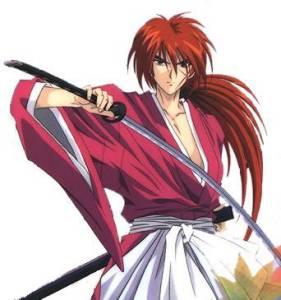
Rurouni Kenshin
.
.
.
.
.
.
.
.
For anyone who doesn’t know the above characters, Vash and Kenshin are from anime. Vash is a skilled gunsman and Kenshin is a deadly samurai from the Meji Era. Two entirely different heroes from entirely different settings. Yet, they are the best examples of a Pacifist Hero. Both follow codes to never kill with Vash doing it to honor a deceased loved one and Kenshin doing it to atone for his role a Manslayer during the war. It is a key part of their stories and personality. Their different reasons also take a new angle that I’ll get into during the list. By the way, I know Pacifist tends to mean no conflict, but it’s the best word that I could find for this.
Now, some people might say that they’re like Batman because Batman doesn’t kill. At least not on purpose . . . most times . . . depends on the movie. They might actually be closer to Spider-Man and Superman here, but I’m still throwing in one major difference for these Pacifist Heroes. Unlike American superheroes, Vash and Kenshin don’t usually go looking for trouble. They will step in when they find trouble, handle ghosts from their past, and try to stop the problem through talking first. Violence is shown to be a rather regrettable decision for these characters while you get the feeling that Spider-Man gets some joy out of throwing down with his enemies. So, I would say a Pacifist Hero is one that does not kill and wants to stay out of the fight entirely.
How can you use a hero like this?
- DO NOT make this character a pretense jerk who thinks he/she is better than everyone because they don’t kill. You can do this if they’re a minor character and supposed to be obnoxious, but a main hero with this path should be very casual about it. They can try to talk others out of killing and be upset if it’s done (looking at you, Vash.), but having them preach too much hurts them as characters.
- Create a deep and realistic back story to the decision not to kill. A promise to a friend can be a good start, but there should be more to that relationship. Don’t just say ‘I refuse to kill because it is wrong’ and leave it at that. People want main heroes to have some depth of morality. Take a little time with this and you might even pull an enemy and/or subplot from it.
- You can have a Pacifist Hero be terrible in a fight. Unlike the examples given, it is entirely reasonable to have a main hero who refuses to fight be unskilled. This means they’re a liability in action scenes, but not everyone is a badass. To counter this type of uselessness, give them a strong area like healing, knowledge, or anything that helps them retain their main character status. Otherwise, readers will wonder why the capable warriors don’t ditch the main guy and finish the story on their own.
- Contrary to #3, you CAN make your Pacifist Hero a dangerous opponent and skilled in combat. Just because they refuse to kill doesn’t mean they’re going to avoid learning how to defend themselves. This brings an interesting dynamic to them because it means they have the ability to easily take a life, but still refuse to do so to their enemies.
- If you have a character who has lived the pacifist life since childhood and never killed then you may want to put in something that tries to break their path. Vash is such a character and one of the goals of his enemies is to prove that his pacifist ways are worthless. This does cause problems for him and makes him question his faith at times, which is great for character development. You can also toy with the idea of the character either intentionally or unintentionally taking a life to throw them into a whirlwind of emotion.
- It can help to have a foil for this character. Either a rival or an ally who sees no problem killing in certain situations or for kicks. This creates a clash of beliefs and it will put the most pressure on the Pacifist Hero. After all, how do you stop a Psycho Hero without falling into their level or making him/her an enemy?
- Enemies and allies from a character’s past works great for an atoning character if you go the Kenshin route. You get to unearth more of their pre-pacifism persona and this can bring out the ‘threat’ of the old version reappearing. You get a lot out of teasing that a hero like this will fall off the wagon and take a life.
So, what do you think of this hero type? Can you think of any others that fall into this category?




 Legends of Windemere
Oh, I know of both Vash and Kenshin. In terms of Kenshin, I think he’s almost like a reluctant hero. He wants to live his quiet life, but he also can’t stand bullies (who bully others and not himself) and tries to help.
LikeLiked by 2 people
Good point. He’s a strange one because he wants to stay out of trouble, but won’t hesitate to get involved to help others. So reluctant is definitely a great word for him. Vash too since he just wants to flirt and eat donuts all day.
LikeLike
Very interesting. I enjoyed this information, and definitely filing it away for future reference :-).
LikeLike
Thanks. Glad to be of help. 🙂
LikeLike
Big fan of both those shows! And Vash and Kenshin are two of my favorite heroes.
I think for the non-killing hero to be most effective, he needs to be perfectly capable of killing (which Vash and Kenshin both are) but makes a deliberate choice not to. One problem with Vash and Kenshin, and this type of hero in general, is I get a little frustrated when they seem to be obsessed with keeping their vows not to kill at the expense of all else, even the possibility of innocent people losing their lives because V or K refuse to kill the bad guy. That is something that needs to be carefully dealt with in writing this kind of hero, so he doesn’t come off as selfishly risking or sacrificing others for the sake of his own ideal.
While Vash and Kenshin are two of my favorite heroes, in my own writing I tend to write heroes/heroines who have no problem with killing someone who really needs to be killed.
LikeLike
I think Kenshin handles it better than Vash, but part of Vash’s story is how his philosophy causes him more trouble. It does make it interesting when he finally takes a life though. Still, you are right that pushing it for too long can get tiresome. I wonder if a character like that could be turned into a villain if they get too obsessed.
I can’t say my heroes have no problem killing. They do it when they have to, but some of them haven’t been numbed to the idea yet. My 5th book actually touches on this for 2 heroes.
LikeLike
Another interesting anime protagonist in this vein is Nanoha Takamachi from the Lyrical Nanoha franchise. The approach with her is different, since her weapon of choice is basically non-lethal (she’s powerful enough that she probably could kill with it if she really wanted to, but there’s little risk of it ever happening by accident), so the “will she be forced to kill” tension isn’t really there. But like Kenshin and Vash, she’s also an ardent believer in talking to one’s adversary and trying to find a personal connection somewhere. Her antagonists are usually people with sympathetic motives trapped in desperate circumstances. They’re so focused on their goals that they don’t realize the mistakes they’re making, and they aren’t willing to listen to anyone else. So the dramatic tension is rooted in whether Nanoha can get through to them fast enough, before they make a fatal mistake and get themselves or somebody else killed. All three of them are warrior pacifists, you could say, but Vash and Kenshin are trying to nullify people who’ve already crossed the moral event horizon without having to kill them, while Nanoha’s trying to stop people from crossing that line in the first place, which puts a very different spin on the conflict. One of Nanoha’s opponents once accused her of being the Devil when she wouldn’t give up on them and go away; her response was, “I’ll be the Devil, if that’s what it takes to get you to listen.”
LikeLike
Interesting. I’ve been out of the loop for years, so I’ve never heard of that one. It’s definitely an curious difference that you point out between her and the other two. You don’t really see heroes who try to prevent the villain from the crossing the line. It is typically after they’ve fallen too far.
LikeLike