
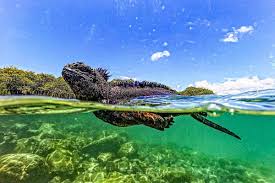
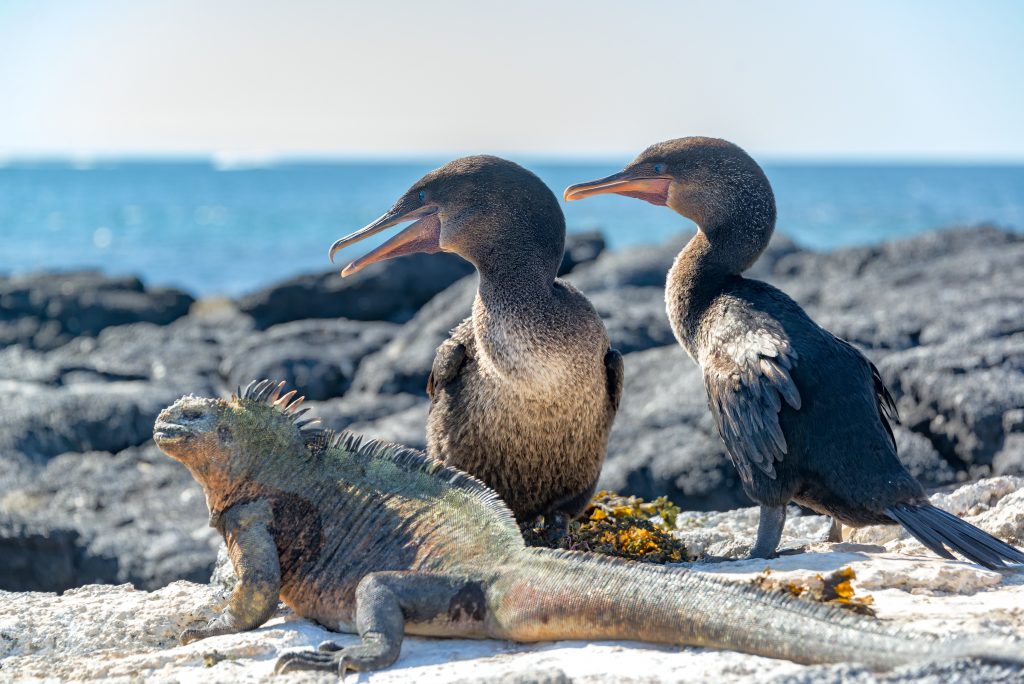
Many think of the giant tortoises and maybe even Darwin’s finches when they think of the Galapagos Islands. Yet, there is another famous animal, which is the Marine Iguana. This is the only marine lizard and all subspecies are found in this region. For this reason, it is considered vulnerable due to climate change reducing its food supply, tourism, pollution, and invasive species eating their young. Being in such a restrained region, they are highly susceptible to having their populations damaged.
Let’s learn about this one-of-a-kind lizards:
- Males can grow to 4-5 feet while females reach 2-3 feet.
- There are 11 subspecies with each one on a different island.
- Marine iguanas feed almost exclusively on algae and seaweed.
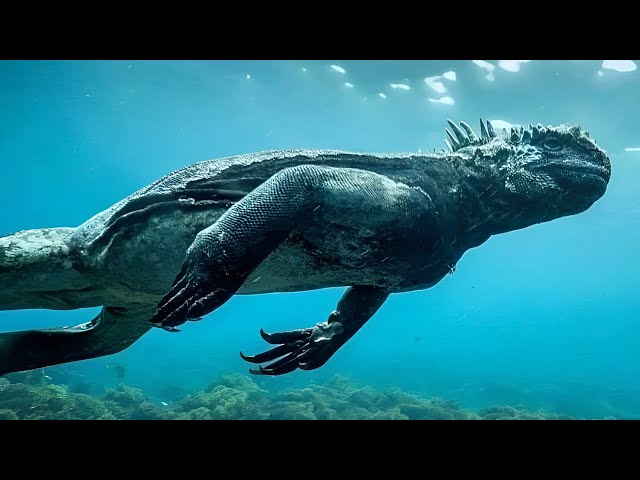
- They can reach depths of 9 feet and hold their breath for 60 minutes. They usually settle for around 40 minutes though.
- Their flat tails are used to propel them through the water. Sharp claws are used to move across rocks as well.
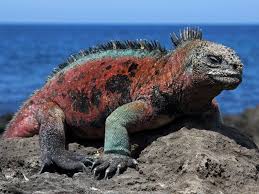
- Their black coloration helps them absorb heat and stay warm when they dive underwater.
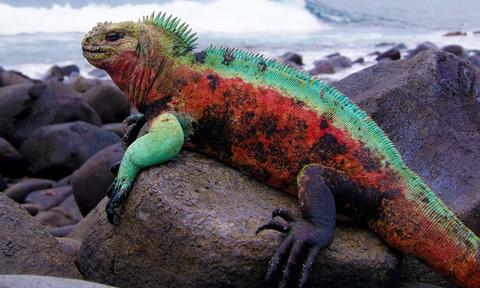
- Males become colorful during mating season. They go from mostly black to blue, red, pink, and green.
- They are hunted by Galapagos hawks, but adults can outrun these predators if they spot the attack.
- Mockingbirds will give a warning call when they see the hawks, which helps the iguanas.
- Finches, lava lizards, mockingbirds, tiny crabs, and fish will eat ticks and other parasites off the iguana’s bodies.
- They have special glands that allow them to sneeze out saltwater.
- Marine iguanas are fully protected under the laws of Ecuador.
- An issue with removing introduced predators comes from cats and dogs. The feral dogs eat larger iguanas, but also keep the feral cats under control. Remove the dogs and the cat population increases to cause trouble. Only the plus side, black rats were fully removed in 2012.
Time for some pictures and videos:





 Legends of Windemere
We absolutely loved watching the iguanas when we visited the Galapagos. The most fun was watching them spit the salt water – they’d be basking in the sun in a large group, the one would start, then they’d all do it! On one island there is a species of the iguana that is not marine. When the tide turns, they turn to the sea but they don’t go in. They eat plants on the island. How’s that for speciation?
LikeLike
I’ve only seen videos and find them amazing. I would love to take a trip with my son to the Galapagos. Way beyond my tax bracket though.
LikeLike
We saved up for two years and went with our kids. They LOVED the animals. We toured on a sailing schooner, which was a lot of fun. I hope you and your son can go some day!
LikeLike
Cool. Maybe in the future. College for the kid is the big expense coming up in a few years. After that, who knows?
LikeLike
We did this when the kids were little (9 and 6) so we weren’t thinking much about college! I do hope you can go sometime!
LikeLike
Terrific videos, Charles. Fascinating creatures.
LikeLike
Thanks.
LikeLiked by 1 person
😀
LikeLike
Wonderful photos, Charles.
LikeLike
Thanks. Found them on google.
LikeLiked by 1 person
🙂
LikeLike
These guys are super cool.
LikeLiked by 1 person
Really fun to watch.
LikeLike
Phew, I thought he would not make it back onto the rocks. Another amazing creature I did not know about.
LikeLike
Glad to share their existence. 😁
LikeLiked by 1 person
The one picture really looks a lot like the Creature from the Black Lagoon.
LikeLike
I got curious and checked the inspiration from the creature. Apparently it’s based on a the Yacuruna, which are mythological amphibian men from the Amazon.
LikeLiked by 1 person