
Today is ‘World Hippo Day’. I thought I would repost the one about the two types of hippo species. Enjoy.
There are two types of hippopotamuses. First, you have the common one that we tend to think of when we hear the name. The one that is the top killer of humans in Africa and listed as vulnerable. There are about 150,000 in the wild. Then, you have the pygmy hippo, which is listed as endangered and doesn’t kill people. There are about 3,000 in the wild. So, what are the similarities and differences?
- Common hippos are large and fat with heads that are bigger compared to their bodies. Pygmy hippos are small with heads smaller compared to their bodies.
- Common hippos can run 29 mph while pygmies run 18-19 mph.
- Both are herbivores.
- Common has a bite force of 2000 pounds per square inch while pygmies have 1800 pounds per square inch. Not bad for a much smaller animal.
- Common hippos have thick, fatty skin for protection while pygmy hippos have thin skin to keep cool.
- Pygmy hippos are antisocial and avoid attacking while common hippos live in groups and are violently territorial.
- Pygmy hippos can reproduce easily in captivity while common hippos have trouble.
- Common hippos have no real predators aside from humans while pygmy hippos are hunted by leopards and crocodiles.
- Pygmy hippos have shorter legs to help them move through rainforests. Common hippos live in shallow rivers in the plains.
- Both species produce a sweat that acts as sunscreen and is antibacterial.
- Common hippos are polygamous while pygmy hippos are monogamous.
- Both have muscles that close their ears and nostrils when they dive.
- Pygmy hippos have a four-chambered stomach while common hippos have three chambers.
- Common hippos evolved from pygmy hippos.
- Both can hold their breath for 5 minutes.
Now for the pictures and videos:
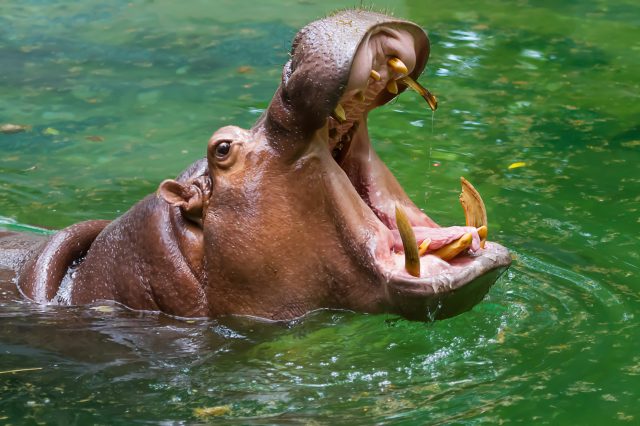
Common Hippo
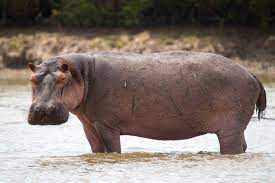
Common Hippo
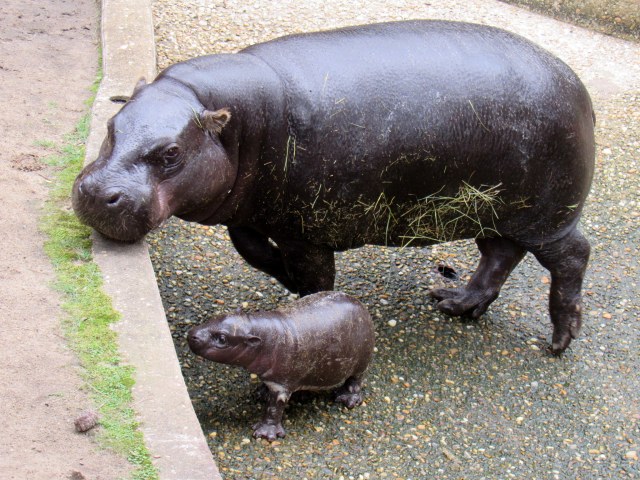
Pygmy Hippo

Pygmy Hippo





 Legends of Windemere
I love the way the hippo swims so fast, not quite the figure of an Olympic swimmer, but that doesn’t slow him down!
LikeLike
It’s funny too. I learned this after I made the list, but they don’t actually swim. Not in the traditional sense. They’re too dense and heavy to actually swim. So, they walk underwater and basically launch themselves along by pushing off the bottom. It’s amazing how quick they can go with this method too.
LikeLiked by 1 person
That’s right, Charles, they run on the riverbed or tgey float. They don’t swim at all.
LikeLiked by 1 person
Almost as cool as manatees using farts to help with buoyance. 😀
LikeLiked by 1 person
😄🤗
LikeLike
Ha ha, that could be a new Olympic event!
LikeLike
Great info. For some reason all I can think of is, “They were elves once.” 🦛
LikeLike
Never heard that phrase when talking about hippos before.
LikeLiked by 1 person
More like fat trolls 😂
LikeLiked by 1 person
I do like to watch hippos – had fun when Fritz (a big hippo) was born at the Cincinnati Zoo (?Ohio anyway). They had videos of him as he grew, with his older sister, Fiona.
LikeLike
Can imagine how much fun that would be. Probably got big fast.
LikeLike
You can find the videos on line – just look up Fritz the hippo. They are really cute and funny.
LikeLike
A lovely post, Charles. I saw hoops in the wild at the beginning of January and last weekend.
LikeLike
So cool. I think I’d be too scared to see them given how dangerous they can be.
LikeLike
Hippos are dangerous if you get between them and their young or the water (their safe place). You have to be careful around all wild animals.
LikeLike
That lion chase was very tense. I was hoping the hippo wouldn’t catch one. Cute videos and great facts about hippos
LikeLike
Guess we know who the real king of the ‘jungle’ is.
LikeLiked by 2 people
I would say. I noticed one lion turn tail and race back to the starting point. Must be the hippo’s river.
LikeLike
They do rule the water there.
LikeLiked by 1 person
Looks that way.
LikeLike
Love the baby pygmy hippo.
LikeLike
They’re cute.
LikeLiked by 1 person
Yes!
LikeLike