
Posted on July 17, 2013 . . . I have no idea why I didn’t note that this was part of the ‘weapons in fiction’ series. Took me 5 minutes to figure out where everything was after gun post. I would say these tips still stand now though. They’re very basic and to the point and work for just about anything.
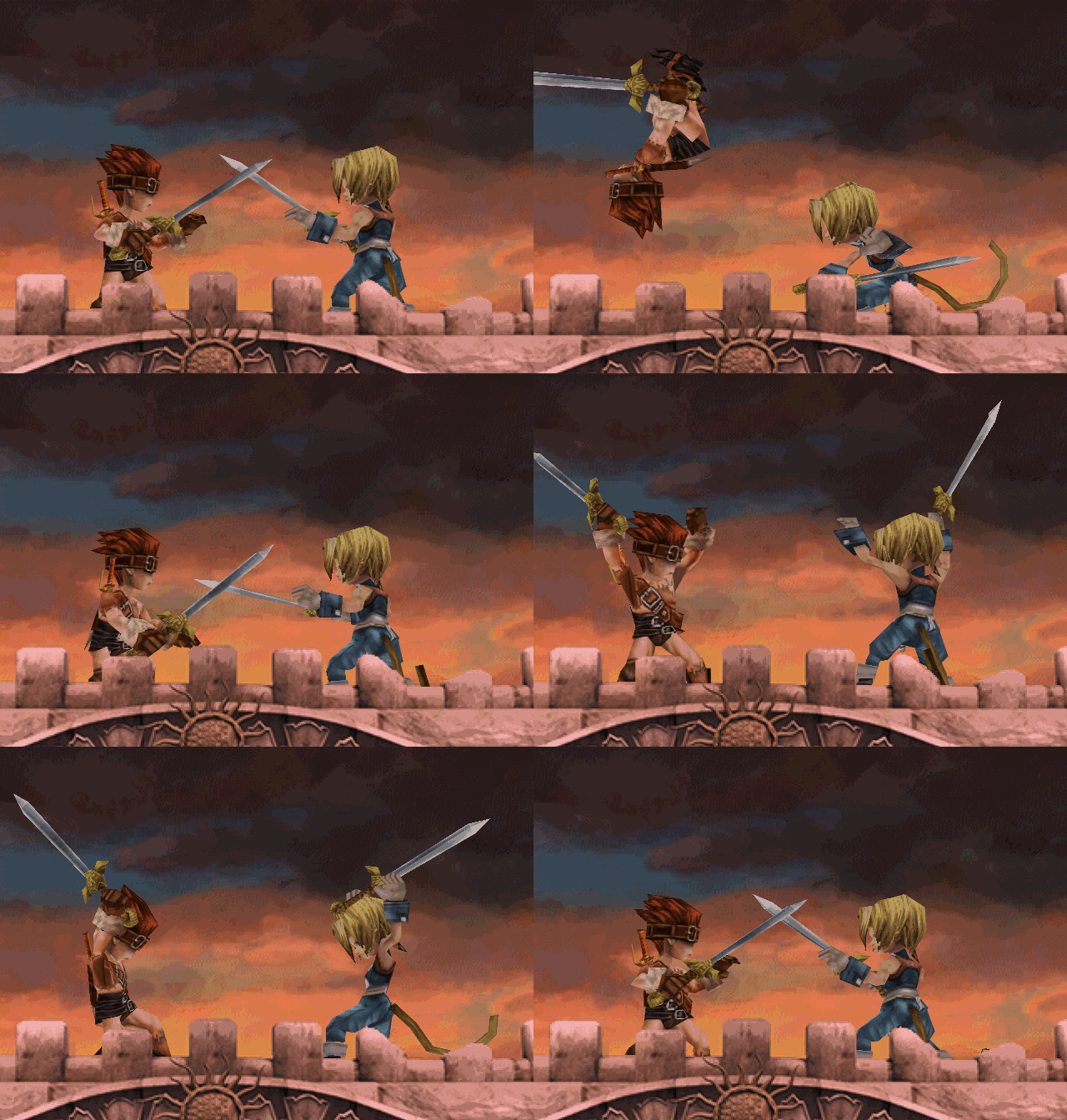
FF9 Sword Fight
Many people believe it is that easy when it comes to swordsmanship. You can see it in writing where characters are stabbing others with amazing precision and no resistance. As if blocking and dodging are illegal. There are many moves with all weapons and you should know the basics when you use them. I’m not talking about being able to physically do them, but visualize them. A fight scene needs to be thought out if you want it deep, extended, and interesting. If you don’t want that then here is what you do:
“Hero stabs villain and goes to bang the damsel out of her dress.”
So, what should you do to improve your medieval weapon knowledge? Research. These are weapons that have been around for centuries and the most complicated weapon you might find are crossbows and siege weapons. Even those have enough information out there for a 7th grade boy to make a basic crossbow for his Technology Education class. I don’t recommend fiddling with it in math class and accidentally having it pointed at the teacher.
Your research tools are:
- Pictures to study the shape and form of the weapon. For example, some swords are better at slashing than stabbing. Lances can stab, but have no edges. The length of a chain on a mourning star. These are important facts that you should know before arming your hero.
- Books to tell you about the weapon’s limitations and strengths. What is the range of a recurve bow? How do you reload a crossbow? How do swordsmen draw their weapons from their sheathes? Is a rapier able to parry a saber? Just read up on your weapons of choice, especially for main characters.
- Videos of weapon practice and sparring while give you an idea of how the weapon is used by the warrior. You will see the range of the swing and how the weight of the weapon effects a person’s movement. Don’t watch one video. Try to find people of various skills and body types using the same weapon.
- If you have the opportunity to learn then take it. Free fencing lessons at a local community building or cheap archery lessons could be used. Hands on use will teach you so much more than only studying. This isn’t an option for everyone, which is why #5 makes a decent substitute.
- Goofing off by pretending to act out your own fight scenes. Laugh if you want, but slowly moving your arms through the moves will help you see the exchange. I do this all the time. Luke Callindor uses two sabers, so I have to see how a block spinning into a slash works with every enemy. Most times, I figure it out easily while other times, Luke crashes into a shield. You will look silly doing this, but it’s worth it to make a detailed fight scene.
All of those tools are important and you must also remember that combat is not just offense. There is defense to be considered. Parrying (blocking) and dodging are very important because it is the only way a character stays alive. Otherwise, your fights scenes always boil down to first strike kills or a embarrassing series of misses until somebody connects. Use the combination of offense and defense to make the fight more interesting. Have a parry followed by a strike that is dodged and then another attack that is parried before a kick to the chin send the combatant to the ground.
Let’s talk a bit about character type and weapon. Unless you’re going for physical enhancement, the body type of a character decides the weapon and fighting style. If I gave Nimby the halfling thief a battle-axe, he wouldn’t be able to use his agility and stealth. This goes for armors too. Stealthy characters should not have heavy, loud armor. A good rule is to think of the fighting style first. If your character is a speed fighter then you need light, quick weapons. If they’re strength then you can go heavy and bashing. A defensive character would need a shield and could use heavier armor. A fully offensive character would need lighter armor and lightweight weapons.
A final note on combat scenes: Even if you’re not putting the move into the writing, think of it. Part of the combat might remain in your head, but you need it to pull the other parts together. These are the areas where you see ‘a series of parries and strikes’ or ‘he dodged every move’. Try to think of the actions and movements of the characters during this times. It allows you to get the location of them in the setting, their level of fatigue, and their mentality after being on the losing side for a bit.




 Legends of Windemere
I see Zidane! So nostalgic.
LikeLike
A classic.
LikeLiked by 1 person
Very good advice! It reminds me of what is so good about your fight scenes and those of LoTR and Avatar: The Last Airbender. As you advised here, the ATLA creators (at least one of them) had studied martial arts and had a martial artist who could choreograph the fight scenes. People also praise Kpop Demon Hunters for its fight scenes.
I found a lot of knife-fight and archery videos online, which were helpful. I watched as many as I could just to get a sense of how someone would hold a weapon, dodge, parry–whatever was needed.
LikeLike
YouTube is a treasure trove of useful info. Though I’ve been finding more fakes these days. A.I. causes some research issues.
LikeLiked by 1 person
Oh that is frustrating and infuriating! So sick of AI!
LikeLike
Very fun and informative, Charles.
LikeLike
Thanks.
LikeLiked by 1 person
Excellent advice, Charles. But as one of your other commenters says, beware of AI.
LikeLike
Yeah. It causes some issues.
LikeLike
Great post. I did a mountain of research for the knife fighting in “Ouat Swamp.” It made everything so much better.
LikeLike
That’s great. I think knife-fighting gets deemed simple a lot. I’ve looked into it a little and it seems fairly complicated since you’re in so close to each other.
LikeLiked by 1 person