
Originally posted on May 1, 2013 . . . This one tries to hit everything, which shows where my mind was. I was more interested in promos, poems, and random stuff as if this was a Livejournal. Yet, flickers of the type of blog posts I would create show up from time to time.
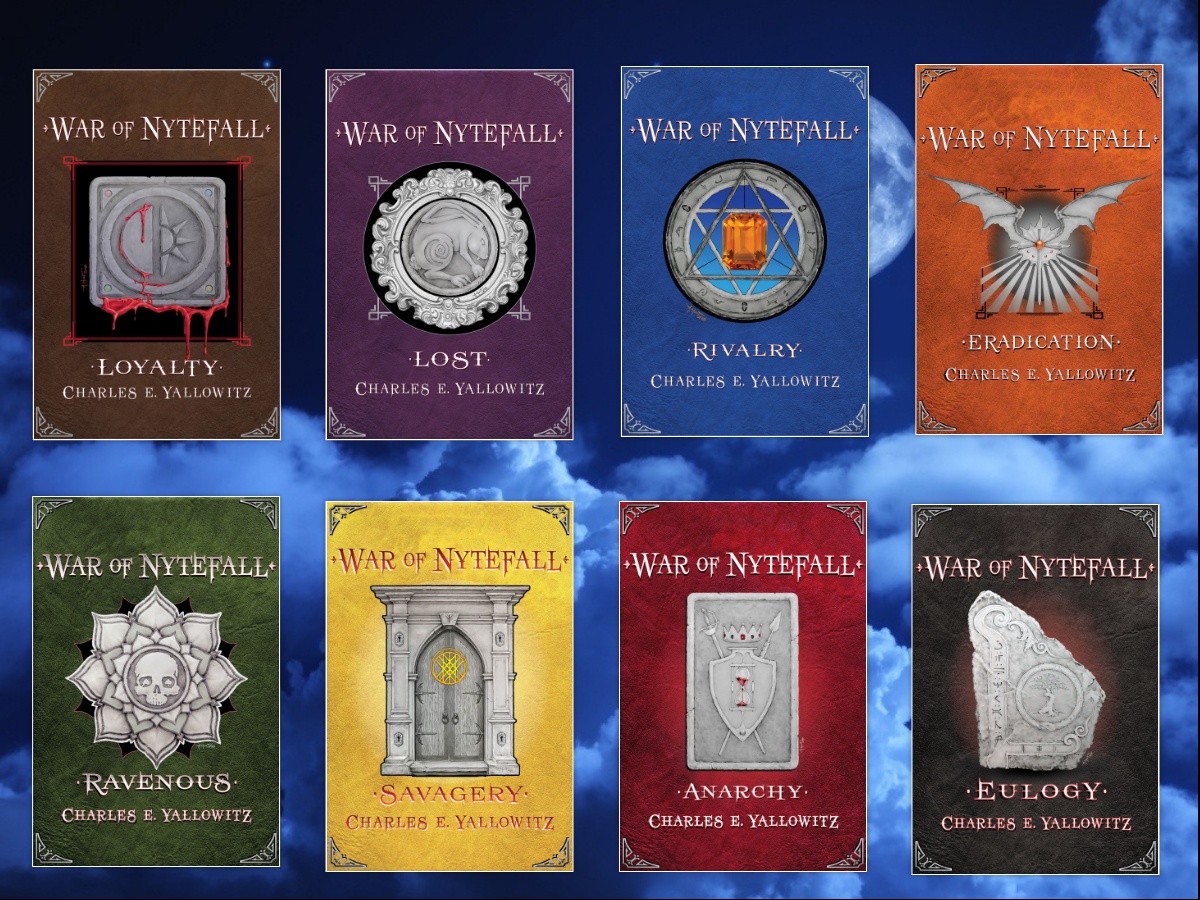
Cover Art by Alison Hunt
So, you’re writing your book and burning through your story like an author possessed by a word-obsessed demon. You’re nearing the end of your manuscript with a twinkle in your eye that is just slightly brighter than the bit of anxious drool in the corner of your mouth. Then you stop like somebody slapped you. The story will end and the characters will no longer be at your fingertips. You contemplate slowing down or not finishing the story. Possibly a lifetime of edits can stave off the horror of completion. Once this insanity passes, you come to the only logical conclusion:
You’re going to write a series.
Welcome to the major challenge of developing characters and extending a story beyond a single book. It works differently in this world. You can’t end with finality. You need to end on a balance of closure and cliffhanger. The adventure for this book is done, but the heroes have more trials ahead. You need to make that clear and that isn’t always easy. If your heroes have achieved everything then they have no reason to move into another book. If they have accomplished nothing then you just wasted your readers’ time. Even a step back for the heroes can be appealing because it means they have a mess to fix in the next book. The point is to make the reader want more.
There are various ways you can embed your story in your reader in terms of an ending. Some methods are ending on a villain scene with them hinting at future plans. You can have the heroes end with a feeling that something is coming. Is it possible to continue a series while having complete closure in a book? Yes, but that typically requires you make a time jump, so the hero has time to settle before the next threat arrives. Another trick is to put a message at the end saying, ‘The Adventure Continues in . . .’ Truthfully, making it clear that another book is coming is one of the hardest tricks for an author with a series.
Coming in a close second is actually planning the series. If you didn’t plan on it beforehand then you will find that you need to change some things. Add some foreshadowing and a few events that give you an opening for a series. You could very well be on the fence about writing a series, so just leave these openings in case you get the urge. Don’t make them too big or blatant because that makes them plot holes. Maybe a mention of a bigger threat from the past or the hero loses an important item that he/she manages to win without. It’s all about subtlety when you aren’t sure.
When you are sure about writing a series, you can get away with a few blunt events. Characters that appear and practically have a sign screaming, ‘We will be main characters in the future!’ or ‘I’m really a villain!’ Remember that you’re working a long game with a series, so you have to play Time Master. You need to consider the past, focus on the present, and keep an eye on the future to make sure continuity is held. This is why you want to keep notes and return to older books whenever you feel a twinge of doubt. Forget a character’s eye color? Go to their debut and NEVER guess. I did this with Luke once where he started with green eyes and by book 3, he had blue. Readers notice these things. Having notes about future events helps too because these are what you would use for foreshadowing. Is a character going to be faced with his fear of spiders in the future? Then make sure there are a few incidents with spiders before you reach that plot point.
Patience is definitely important for writing a series. You need to make sure your chapter scenes are deep enough to develop your characters because the readers are going to be with them for a long time. Give your cast hopes, dreams, fears, quirks, and various subplots that will gradually play out alongside the main quest. By the end of the series, you want the readers to look at the characters as old friends that they have to say good-bye to. To this end, you also have to be careful not to overstay your welcome. If it looks like the heroes are never going to reach their goals then the reader will either quit or start rooting for the villains. A good example of this is Inuyasha. An anime series (and manga, but I never read it) where every season, the heroes are rushing to gain a new power to permanently kill the villain. Every time, they get the new power and the villain is already too strong for them. Doing this repeatedly can turn your series into a joke instead of a serious form of entertainment.
Now, you might be wondering how you can develop a character through a series. If you aren’t wondering then you need more coffee. Again, patience is key. In a series, a character can develop slowly. The first book should not see them reach their full potential, but they can step on the right path to get there. You can even have them evolve in the wrong direction at first to make the crash and rebuild later in the series. For example, a hero that gets very cocky and arrogant with every victory only to be defeated in book 5 and then needs to rebuild his courage for the rest of the series. As long as your character doesn’t peak too early or stay in the same position for the entire series, you’ll be fine. Truthfully, there are so many ways to do this and some ways that haven’t even been invented yet.
The series isn’t for everyone and some series aren’t even directly connected to each other. You can write a series that takes place in the same world, but with a different set of characters for each book. I would recommend having a few characters make cameos either physically or by character conversation in the other books. You need to give a sense of connection between the series.
So to all of you series writers, good luck and remember to enjoy the journey. In other words, proceed forward in a calm, rational manner and no rushing ahead because you have an amazing idea. If it really is amazing then it will be there when you need it.




 Legends of Windemere
Good advice for series writers!
One of the things that irks me about some series is when an author writes one book you love and then decides to jump ahead 20 or 1000 years into the future for the next book. I’ve seen two series like this. I loved the first book and hoped to read more with the characters I had come to love. But nope! The author decided to move on to a completely different era in the same world. I didn’t bother reading book 2.
LikeLike
Was there at least closure from the first book? I can see it working if the story is about a threat that spans many years. Kind of like how a new Belmont is needed in several Castlevania games.
LikeLiked by 1 person
Yes there was a closure.–a huge battle against a seemingly unstoppable force. But I didn’t have any interest in leaping a thousand years into the future. I was just getting to know the world as it was. So it was different from a game or a series with an immortal foe who keeps coming back to wreak havoc.
LikeLike
This actually reminds me of when I finished ‘Legends of Windemere’ and started ‘War of Nytefall’. I gave people closure and made it clear that I was moving on to another Windemere series. I’d say most of my audience who made it through the series didn’t follow me to ‘Nytefall’. A few even stated that they weren’t interested in a vampire story, so they never gave me a chance.
LikeLike
Your advice is excellent. Having written two series, I can say this post is helpful to anyone wanting to do the same.
LikeLiked by 1 person
Thanks 🙂
LikeLike
😊
LikeLike
I struggle with series, but not with the one where every book is a solo adventure. It’s that overarching story that baffles me. These are good tips, though.
LikeLike
It’s tough. Every story kind of has a 3-act system though. You will always have a rising action, turning point, and conclusion. For a series, you can have one per book while the bigger one gets more time with each position. If that makes any sense.
LikeLiked by 1 person
It makes sense, but I struggle getting it to happen.
LikeLike
Thanks for this one, Charles. I was someone that started one book, only to find it had morphed into a series.
LikeLike
You’re welcome. Happens all the time.
LikeLike