
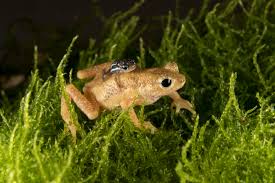
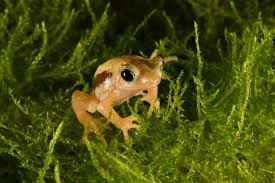
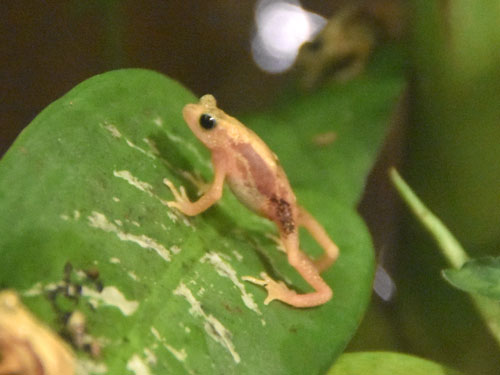
The Kihansi spray toad once lived in a 5-acre area at the base of the Kihansi River waterfall in Tanzania. The females can grow to 1.1 inches long and the males up to 0.75 inches long, which means you can fit a lot into such a tiny space. Also, they fertilize internally, so they give birth to live young instead of eggs outside of the body. More importantly they are extinct in the wild.
The cause of extinction is primarily habitat loss due to the building of the Kihansi Dam, which reduced the amount of water spray. Considering their name, you can tell that they require the spray to survive. They did play a sprinkler system to mimic the spray, but they didn’t have it ready by the time the dam was activated. It was turned on at some point, but broke during a dry season. This also allowed chytrid fungus, a disease that decimates amphibian populations, to run wild through the remaining toads. By 2004, the species was labeled as extinct in the wild or extirpation.
So, what is being done?
In 2001, the Bronx Zoo took 500 spray toads from the wild and began their breeding program in an effort to save the species. Around six zoos took toads, but various complications resulted in only the Bronx Zoo and Toledo Zoo being successful. It would be in 2004 that they got all the kinks out and started making major headway. The Toledo Zoo opened an exhibit in 2005 to make the public aware of the spray toads and the Bronx Zoo did the same in 2010. To date, both zoos have a few thousands spray toads each and have helped others zoos start their own successful breeding programs. They have a reintroduction program connected to this as well, but it is difficult because the toads take a while to acclimate to being in the wild. This leaves them open to predators, starvation, and the chytrid fungus that is a constant problem.
Another aspect of this recovery is the repeated attempts to revive the environment using sprinklers. This is not as successful and several tries have resulted in a change to the habitat, but the people doing so seem to keep learning from their mistakes. If anything, it does show they are trying hard to fix the problem and bring the toads back to their 5-acre homeland. If you think they should just get rid of the dam then that causes other issues like flooding and a potential surge of pesticides. That would destroy the area completely if not permanently.
What do the Kihansi spray toads look like?






 Legends of Windemere
This is amazing. Thanks for sharing it.
LikeLike
You’re welcome.
LikeLiked by 1 person
They’re kind of cute and it is heartening to see that there are environmentalists who are working hard to bring these toads back. They are probably important to the environment, too.
LikeLiked by 1 person
I don’t know if they’re a keystone species, but I’m sure they have an important niche.
LikeLike
Undoubtedly
LikeLike
What a great effort.
LikeLike
Definitely.
LikeLiked by 1 person
I’m so glad these toads weren’t just allowed to go extinct. Thanks for the report, Charles.
LikeLike
You’re welcome.
LikeLiked by 1 person
😊
LikeLike
What cute little toads. It would be such a pity if the conservation didn’t succeed.
LikeLike
I agree. Glad that it’s working so far.
LikeLike