
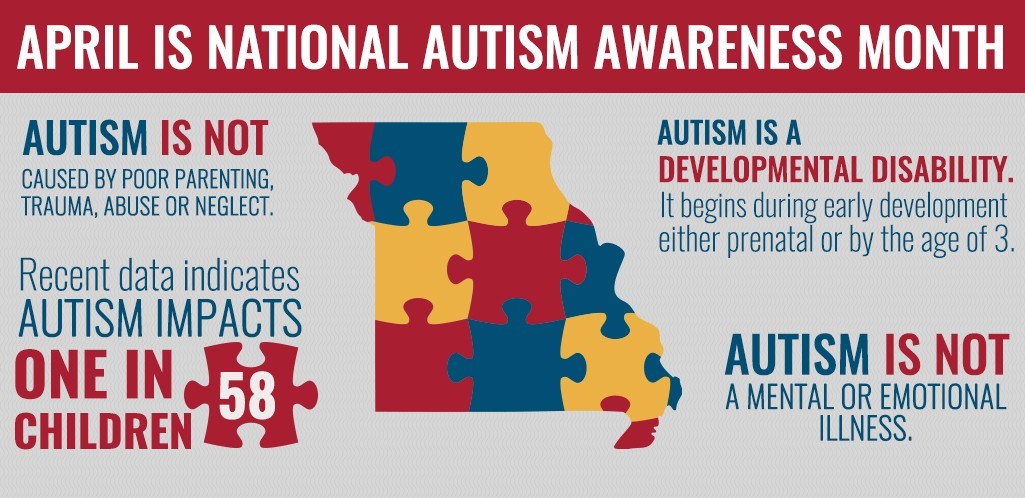
Many times, I’ve seen my son or an autistic student have trouble with something that we take for granted. Understanding social cues, basic math, idioms, and the list can keep going because it differs from person to person. When I see it happening with someone who doesn’t know much about autism, I see that person struggling to figure out why the problem is happening. Not how to help, but the why. So, I’ve ended up explaining the following to adults and students:
Autistics, and neurodivergent people in general, live in a society that was not designed with them in mind. Everything around us was made with a neurotypical mindset and expectations. So, those with autism need to learn ways to navigate this world using their own abilities. Accommodations can be made as long as the people around them are understanding and willing to be flexible. Sadly, this isn’t always the case because those that don’t have autism don’t always understand what is going on. Even parents of autistic children can be lost on how to help or grow frustrated at a situation.
Now, the previous paragraph were my own thoughts from observing my son and some of my students. It also came about when arguing with a person who swore that those with autism were simply lazy and shouldn’t have any problem in society. I still don’t know if I convinced this person otherwise. Anyway, the encounter and other experiences really got me thinking about how someone with autism views the world. It isn’t something I can fully understand though, so this is all guesswork.
One thing that many people with autism have to deal with is overstimulation, especially children and nonverbal. This is when their senses and/or emotions become overloaded and they start losing control. Stimming, leaving for a safer area, and other tactics can help to avoid a meltdown, but this is a big challenge. From talking to my son about how he senses and feels things, it’s almost like he doesn’t have a natural blocker to subconsciously filter out various stimuli. As they get older, they learn how to recognize when they are reaching this point, but that times time. Big crowds, loud music, new situations, angry yelling, and other highly stimulating situations can still come with a risk. This is when earplugs, headphones, and stimming tools can be useful if the person has them. For example, my son wears earplugs to the movies because they can be really loud at some points.
Some people with autism might depend on other senses too. If the world is too bright or loud then they might take action to limit those senses. Sensitive hearing seems to be fairly common with autistic people, which I don’t understand the reason for. Maybe they grow up having to listen harder since they have trouble with instructions. Still, I’ve met autistic people, and other neurodivergent types, who have incredible senses of smell. Some hate being touched, so they avoid that sense, but others depend on it a lot. The point is that an autistic person may develop a way to view and navigate the world depending on a sense hierarchy that differs from our own.
There is also the usage of what one may call a sixth sense, which I’ve heard has caused a stir in a few circles. There is a current theory that nonverbal autistics have telepathy and try to communicate in such a way. It was explained to me that this is more them reading our thoughts, which has some anecdotal evidence. Don’t think I’m going to get into this because I’m still reading up on the theory. It’s a little hinky to me, but I don’t know if that’s because me being a fantasy author thinks of telepathy as a two-way communication instead of simply reading thoughts. I also know that parents of nonverbal children can get desperate for a sense of connection and will jump at any theory to lock in that their child is somewhere in there. I’ve been there myself when my son was much younger and had a major speech delay.
My own thoughts on this is that people with autism grew up being taught how to control their emotions. At least to be aware of the stronger ones because these could trigger meltdowns. Nonverbal children would have a harder time and probably have a higher chance of seeing frustration-based outbursts. Keep in mind that not being able to speak doesn’t mean they are unaware or stupid. In fact, I kind of think that they develop what one would call empathy. They can sense when a person around them is about to get angry or sad through nonverbal communication. For example, a nonverbal autistic person might notice someone’s voice rise in a way that they recognize as an angry outburst is about to happen. So, they might try to leave the area or, if unable to, become agitated long before anyone else notices what is about to happening. This is just a theory of my own, which I’m still building in my own mind.
In the end, it’s difficult for any neurodivergent person to navigate our society. Patience, understanding, and helping when asked is needed from neurotypicals. Imagine if you lived in a world where it was geared towards a group you weren’t apart of. Maybe there’s a dimension out there where society was built around people being blind, so the minority with eyesight have challenges to face every day. That’s extreme, but I think that would get the point across easier than a more subtle example.





 Legends of Windemere
This is very good information! Much needed. Some of my friends were tested as adults for autism. They are now walking through the aftermath. Because there is so much awareness nowadays, one friend admitted to me that she feels validated.
LikeLike
Thanks. I haven’t met any adults who have been officially tested. Seems there’s still a stigma or at least a belief that autism is a ‘new thing’.
LikeLiked by 1 person
Your example of a world built for blind folks is excellent. It hit home the difficulty that faces neurodivergent people.
LikeLiked by 2 people
Thanks. Glad the example worked. It hasn’t failed me yet.
LikeLiked by 1 person
😊
LikeLike
This is a really good explanation.
LikeLike
Thanks.
LikeLiked by 1 person
It seems to me that the biggest thing people can do it not jump to conclusions like the kid is lazy. As long as there is an adult present working with the kid, just keep your thoughts to yourself and go about your business.
LikeLiked by 1 person
Good points. Another issue I see is people allowing kids with autism to get away with bad behavior. There’s got to be a balance.
LikeLike
I taught a boy with Asperger’s Syndrome many years ago. He struggled with many of the things the rest of the children took for granted. In class he had a permanent helper.
The school held a training day for all the staff so we would know what to expect from him and how to treat him.
I know there are many different types of autism, but I think that everyone should be taught that it’s simply that the brains of autistic people are just wired in a different way, so they see the world differently. Then we can try to understand instead of condemning.
LikeLike
I’ve heard many arguments for all teachers being trained to at least understand autism. I think that makes a lot of sense.
LikeLiked by 1 person
It does.
LikeLike
Your paragraph to explain autism is spot on. I have two non-verbal students who ‘get it’ far more than other students. It makes me sad that others don’t understand autism. As to overstimulation, I learned early on in teaching that less benefits all children. My classroom is void of bright, primary colors and items are stored in neutral colored containers. I have three posters on my walls – Starry Night, Grandma Moses, and Eric Carle. That’s it. Children’s art is displayed in the hallway. All of this is beneficial to students, especially those who might be autistic.
LikeLike
It’s funny because the room I work in has a lot of color and stuff. The walls are covered with the kids’ art projects though, so I wonder if that’s the difference. They control their environment.
LikeLiked by 1 person
Big red flag there, Charles. Really. And yes, you’re right. That’s the difference. When a classroom has lots of color and ‘stuff’, children are sidetracked, can’t focus, and definitely become over stimulated. Is this something you can talk to the teacher about?
LikeLike
The teacher makes the rules, but the kids don’t have any problem with all of the ‘stuff’. This is a high school class too. Any distractions are from actual people or school equipment that we can’t teach lessons without. As far as the decorations, the kids really enjoy making them and seeing them put up.
LikeLiked by 1 person
Good points, Charles. I bet the kids have some distractions from the stuff, but it’s often subtle and hard for a teacher to see. It’s much easier for me with the young ones.
LikeLike
Maybe, but we keep them active with lessons.
LikeLiked by 1 person
🙂
LikeLike