
Google Image Search
This is going to be a strange and awkward topic. I’ll connect it to writing after I give the initial catalyst event.
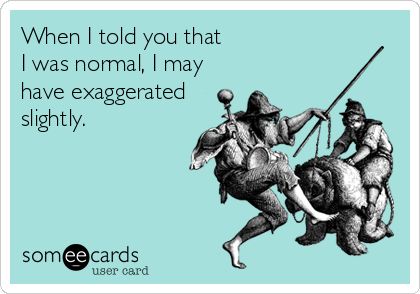
So, I had to deal with two people who don’t always get along. I brought up a complaint one of them made to me about the other. They were then accused of always exaggerating things, which causes trouble. While I agreed, there was an emotional side of things that made me understand why things felt bigger to them. Of course, a few minutes later, the other person made an accusation about an event I knew of and they went all in on exaggerating things. Let’s just saying pointing this out didn’t go in my favor because I was told that they are telling the flat truth.
That event had me thinking about how many people will exaggerate things, but believe their own words. I used to think this only happened when a person repeats the same life over and over again. They say it so often that they get themselves to believe that was the truth when it wasn’t. Basically, they gaslight their brains and it becomes a challenge to get them to admit what really happened. When you have people arguing over a event and even one of them is exaggerating, you can’t get anywhere. Either they have to suck up their pride to admit they went too far or dig in their heels. Sadly, I tend to see the second option.
Exaggeration on a low scale can effectively get people on your side, but it tends to fall apart when you make things too big. At that point, those who don’t blindly agree with you or are actually thinking about your story could turn. The story transforms from a simple retelling to a flat out lie. Many times, an exaggeration of a real life event is done to boost the speaker’s ego or tear another person down. Heck, I’ve seen a few people achieve both of those goals in the same conversation. Flat out manipulation, which one could consider toxic, harmful, and possibly evil.
Unless you’re an author telling a story where you want to make your world and characters as colorful as possible. Authors have a long history of using exaggeration to boost the effectiveness of a story. It could be with describing the world or the characters, but they come very close to breaking the suspension of disbelief. Fantasy authors do this a lot for creatures and battles too because one feels like they have to push extra hard to get a truly fictional world across. Don’t know what I would do without my army of adjectives to help me describe things. Can only say ‘large’ or ‘huge’ so many times, which are milder versions of exaggerations.
Even with writing, you can go too far with exaggerating things. This can happen when you describe one thing in a ‘normal’ way and then exaggerate something else to the point where they don’t mesh. It’s similar to a liar who doesn’t know when to quit and pull back on the fibbing. The author just goes a few steps too far and damages what they have previously made. For example, describing a cavern as being the size of a small house because you aren’t thinking much about setting. Then, you have the characters run into a monster with exaggerated features like enormous body, limbs that stretch for miles, or a mouth that could swallow an adult dragon. The two things don’t always add up in the mind of the reader, especially if the author made the cavern bigger in their mind as they wrote. Oops.
My question about exaggeration being effective really does appear to depend on how far one goes. Like any type of lying, there is a line you shouldn’t cross if you want to be believed. The other person’s trust in you is important because they can’t look very hard at the exaggeration before it crumbles. I definitely see it as a potent writing tool, but one with sharp edges that you can get yourself with. An author can’t always tell when they’ve gone too far because their minds adjust things in real-time. Hence, use exaggeration with caution if you want it to be effective.




 Legends of Windemere
I think exaggeration is tricky, because sometimes the use of it depends on the narrator. If you’re telling your story through an unreliable narrator who might exaggerate things, a reader who has caught on that this person is unreliable, won’t believe the narrator’s story. But if an author has chosen to use an exaggerated style in descriptions (as in the case of the cavern the size of a small house), that could backfire depending on the reader’s frame of reference.
A family took me with them to stay at the lake cabin of someone they knew. In my mind, a “cabin” was very small. But the house had five bedrooms, plus a huge basement. Just about all of the people I know who own a house do not have a house this large. Yet the owners called it a cabin.
LikeLiked by 1 person
Maybe an exaggeration for one person is reality for another. I remember someone who always talked about camping and roughing it. We learned they would go to a site with cabin rentals.
LikeLiked by 1 person
Wow! That’s hilarious! 😄😄😄 That’s like what people call glamping.
LikeLike
This person hated it when anyone pointed out it was glamping or cabining.
LikeLike
Your warnings about exaggeration are on point. I for one have trouble with authors who don’t pay attention when they exaggerate. You almost want to ask it they did any editing before publication.
LikeLiked by 1 person
Sometimes you’ll find out that they didn’t. Although, I think another part of it is that they get so into the description that they lose track of what they’re doing. Happens to me a bunch, which is why I do the editing by hand now. I seem to catch incongruencies more often . . . Can’t believe I spelled ‘incongruencies’ correctly on the first try . . . I got ‘correctly’ and ‘try’ wrong. 😦
LikeLike
Had to laugh over your typo challenges. I agree some go into deep descriptions and lose their way. Sure can’t be on purpose.
LikeLike
The rabbit holes of imagination. Authors do play along the edge a lot.
LikeLike
I agree.
LikeLike
Yup.
LikeLike
You’ve got me thinking. I’ve had fun writing about liars, but exaggerators could be fun characters. I need to put some quality thought into this one.
LikeLike
They’re kind of fun. Low level liars, but with a wide range of usefulness.
LikeLiked by 1 person