
Google Image Search
As stated, there is a trend to turn evil villains into more sympathetic and misunderstood characters. This has caused some people who like bad guys to come up with their own explanations for how they are misunderstood instead of being evil. Some explanations can work while others are highly stretched. So, what is the difference?
I think the big difference is the perception of others and the audience about the character. An evil villain is doing truly evil things without question. Their intentions revolve around power, pain, and doing harm with the knowledge they are bad. Characters understand this because it’s clear as day. A misunderstood villain is one that are acting because they think they are pleasing others or don’t realizing they’re committing harm. Those around them think they are evil, but the audience knows there is more to it. Eventually, other characters will learn it too.
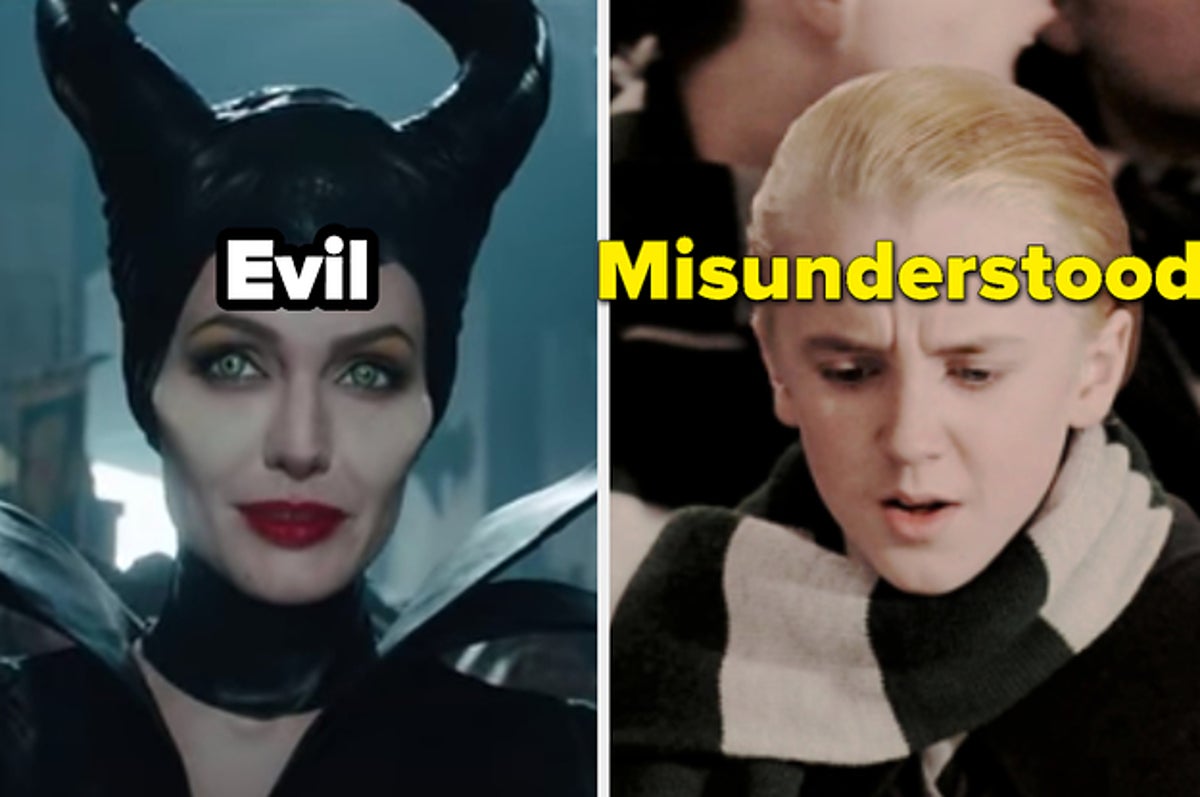
The pictures above are good examples too. Maleficent is knowing doing evil things to cause pain and fear. There isn’t any real misunderstanding even with her rewritten background of being wronged. (More on that later.) Then, you have Draco Malfoy who is considered a villain, but is more brat than evil. People understand that he’s a child and trying to please his father or friends. This is clear when you realize how often he does things that aren’t evil, but closer to rivalry with Harry. Draco also has enough normal, humanizing actions and failures that you get a sense his heart hasn’t fallen completely to evil. The difference might be subtle, but it’s there.
Now, I know at least one person will bring up the Maleficent movie and say that makes her misunderstood. Yes, but look at what had to be done. When you want to shift an established evil villain into misunderstood, you need to redo their entire history or establish one that hadn’t existed before. Maleficent couldn’t just shift considering she was one of the greatest Disney villains for decades. She had to be changed, which included altering her ending. Now, you have this alternate version of this villains. It’s basically a revamp and doesn’t really build on the original story. Think of it as a multi-verse thing, which ends up causing division among fans.
To be honest, I don’t really understand this trend of turning evil villains into misunderstood ones. How does this make a story better, especially if you have to turn heroes into bad guys and rewrite the whole thing? I would prefer to see new villains who are misunderstood or evil instead of what I see now. Then again, new stuff is hard to sell and typically doesn’t get off the ground. Maybe the point of this trend is to get attention with existing creations and cause some friction. Hope not because that can’t go well for the character in the long run.
What do you think about misunderstood vs evil villains?




 Legends of Windemere
Good points about Maleficent and Malfoy (two M names—I see what you did there 😊). I’m not in favor of the current trend. I know a lot of retellings are being done. I have nothing against them. But I’m not in favor of changing established characters, particularly those written by authors who seemed to have a definite idea of what they wanted for those characters. As I mentioned in a previous comment, this is why I like what Suzanne Collins did with her Snow character. He wasn’t misunderstood. He made definite choices that led down a believable path.
LikeLike
One thing I don’t get is the lean towards misunderstood. Why not show they were evil from the start? There are legit bad eggs out there in the real world. Maybe all this misunderstood stuff is why so many give real world sociopaths a pass.
LikeLiked by 1 person
Your distinction is good, Charles, and I do NOT like it when perfectly good (bad) characters are rewritten to change them. At least as an author, you have the right and ability to keep your characters as they are!
LikeLike
True. An author doing it to their own creation is one thing. I have a story that would reveal the fall from heroism of one of my first series’ villains. Yet, I left a foundation for it beforehand. A different author could take one of my irredeemable villains and try to twist them for shock value.
LikeLiked by 2 people
Sometimes villains don’t need to be redeemed. Hans Gruber fell from that tower. Yippie ki yay, … I think it worked well. So much of this is about monetizing intellectual property. Something worked well, so they milk it for everything they can. The weird part is it worked well because it was unique, so they close the door to other unique things and only focus on the past success. I don’t really care what Hans’ backstory was. He needed to be evil and he was. Now give Charles Yallowitz his shot and let him be the next big thing.
LikeLiked by 3 people
It’s a shame that this milking is the trend. I thought they gave Hans enough backstory to establish him well as a villain. No need to go further after he dies.
LikeLiked by 1 person
I think it depends on the story. Some stories need a truly evil villain while others maybe need a misunderstood one.
I do, however, disagree with interfering with the type of villain written by the author. The author will have written what s/he feels is best, and what s/he wants for the story.
This is, as someone else said, trying to muscle in on something successful for financial reasons. But it might be that the original was what was right, and what made the success.
There has been, recently, a similar thing done with vampires.
LikeLike
Vampires I see as different here only because they’re a species. It isn’t like you can’t alter them to be different for a specific story or world. Messing with villains like Cruella is doing so with an individual. I find that harder to get behind due to the more established individual lore.
LikeLiked by 1 person
Of course there can be “bad” villains and “misunderstood” villains. There can be characters you think are villains but aren’t. Look at Snape from the same series. He did act on grudges against Harry’s family for past bullying, but he also pretended to join the Death Eaters so he could feed info back to Dumbledore.
A lot depends on what the author intends, how long the story is, and if it’s part of a series. A novel or series of novels gives the author much more space to delve into a character’s motives. In a short story, you have to keep it simple.
LikeLiked by 1 person
Series definitely help with establishing both types of villains. Never thought about how short stories require simpler ones.
LikeLike