

Google Image Search
This creature comes from Japan and it is what they call river otters. These fall into the category of yokai, which are Japanese demons. Known to be tricksters, they are similar in habits to kitsune (foxes) and tanuki (coming on another day). Of course, these means they are shape-shifters.
So, what does a Kawauso look like? It’s about a meter long and very furry. They have webbed extremities and cute whiskers. A decent-sized tail helps them with balance and swimming. They have a very playful nature and make high-pitched noises that are easily identified. Still, they can be shy at times. In fact, they look like:
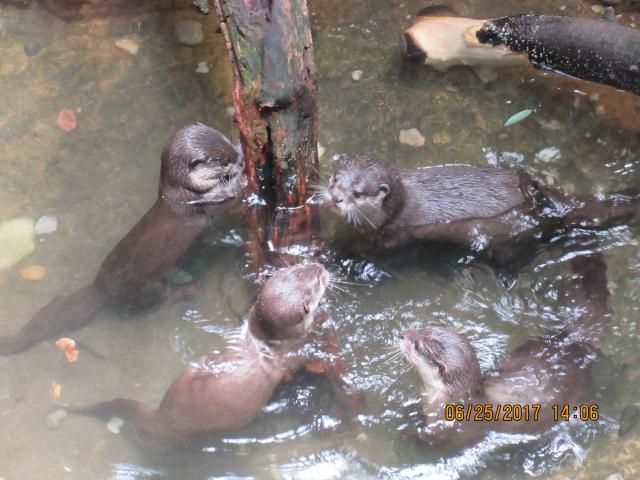
Otters
Yeah, the Kawauso normally looks like a regular otter. At best, you may find it drinking sake (rice wine), but that is only in its human form. They only change their shape when they go in search of alcohol or want to pull a prank. Kawauso love their pranks, which are mischievous and rarely dangerous. Their ability to imitate other sounds, including human voices, makes them even better at these tricks. Although, some tales have them only able to repeat what was said to them, which gives them away. A lot of this stems from the otter’s playful nature.
If you’re wondering why a demon would stay in the form of an otter then you’re going in the wrong direction. A Kawauso is an otter that has grown old enough to gain magical powers. Japanese folklore has a lot of creatures that were a normal animal or inanimate object until they reached a certain age. They are also rather stealthy since they can quickly put out a lantern at night. This is done to leave travelers wandering in the dark, which isn’t dangerous, but definitely scary.
The Kawauso has different stories attached to it:
- They will turn into a young beggar wearing a straw hat in the hopes of getting alcohol.
- They will turn into a beautiful woman to seduce men and then run away laughing after they succeed. Other versions from the Edo period have them killing the men that they seduce.
- Another deadly tale talks about a Kawauso in Ishikawa Prefecture that lives in the castle moat. Again, it would transform into a woman, invite men over, and then eat them.
- In the area of Hiroshima, they will turn into a monk and wait for travelers. If someone approaches and looks up, they would grow in height until they were a gigantic monk towering over the person.
- The Aomori Prefecture talks of people being possessed by Kawauso and losing their stamina. These yokai would also transform into severed heads and get tangled in fishing nets.
- One folktale has a monster otter (not sure if it was called a Kawauso) that turns into a human and tries to kidnap girls to make into its wife.
- Finally, there are tales that have these creatures involved with sumo. One version is that they trick people into doing sumo with a rock or tree. Another has the Kawauso as a water demon that does sumo with otters.
Contrary to the list, Kawauso are rarely violent. Most of their tales and encounters involve the pranks. Either the young beggar trying to get alcohol or the young woman seducing men only to run away. Putting out lanterns and calling out names at night to confuse people are fairly common too. Lets hope that is the real story just in case one runs into a Kawauso.





 Legends of Windemere
A fairly delightful monster for sure. It is great to learn about them.
LikeLike
Nice to have kind of playful one.
LikeLiked by 1 person
😁
LikeLike
They don’t sound terribly monstrous. Just a bit manic, maybe.
LikeLike
True. I think there are plenty of monsters out there without the high aggression we expect.
LikeLike
I like these guys. I did some looking into Japanese culture for a story in the past. They have some amazing mythology.
LikeLike
There are so many ghosts and spirits in Asian cultures. Makes for a lot of fun stories.
LikeLiked by 1 person
Doesn’t sound like a monster to me but a playful rendition of a real river otter – what wonderful mythology!
LikeLike
Guess it still counts. They always have the ability to be malicious.
LikeLike
I like this one, Charles. The idea of turning into a demon (?) If something lives that long is a new one on me. Better check the age of a couple of heirlooms I have. 😂😂
LikeLike
It’s fairly common in Japanese folklore. Maybe some other Asian cultures. Even inanimate objects can gain life.
LikeLiked by 1 person