
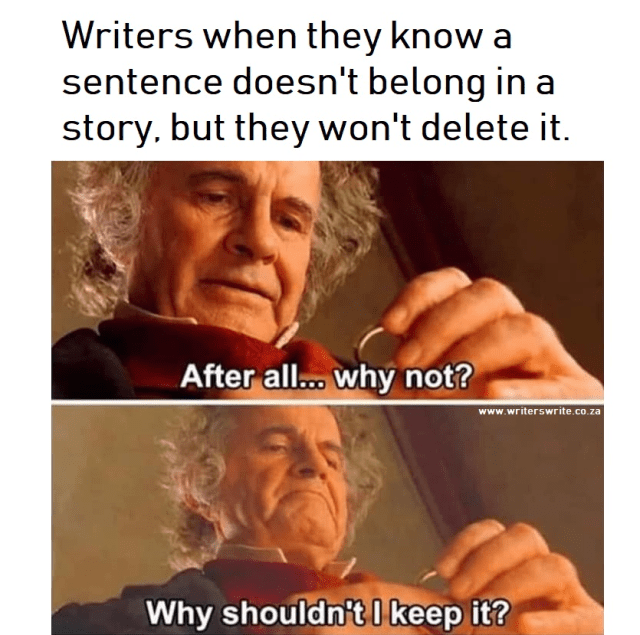
Writing a book like Do I Need to Use a Dragon? boils down to giving advice. That’s fairly easy for people to do. What isn’t easy is to take advice. Kind of makes one wonder how these kinds of books become successful in the first place.
The truth, in my opinion, is that people don’t like being told what to do unless they are asking for help. So, reading a ‘how to’ book means they are looking for advice. The same goes for when an author gets beta readers, proofreaders, and editors. One can accept this advice because we were asking for it. Makes perfect sense because it means you are in control of the situation and have a plan. It isn’t an unexpected handing off of an opinion that may feel like a slap in the face.
It really does feel like an attack when you’re given unsolicited advice. You’re just minding your own business and somebody suddenly interjects their opinion. It wasn’t asked for or expected. This makes the advice come off as a criticism and possible insult. With artists, they can easily wonder why advice would come their way without warning unless the giver had issues with their work. Even if what is being said has merit, there is a highly likely chance that it will be ignored out of shock or pride. It’s no longer about improving, but about maintaining control.
The opposite is true of giving advice. Whether we’re asked or see an opening, most people will at least ask to offer a suggestion. This is because we want to help out of genuine care or for a boost of pride-induced serotonin. It could also be that we see an opportunity to get some attention as an expert or knowledgeable. Whatever the reason, people do love sharing what they think and know, especially authors. After all, writing a book is basically showing off what’s in our head. Even fiction has this aspect of sharing in the hopes of getting recognition.
I think a lot of this involves human nature and psychology. We have to understand how to approach a person with unsolicited advice, which could be as simple as asking. Nobody likes to be ambushed with opinions, especially if they’re trying to create something on their own. Intruding on the creative process can throw a person off and make them become highly defensive. That’s more human nature because we’re treading into the territory of ego and control over ones actions. It doesn’t seem that way, but it really is a big part of accepting advice. Probably at the core of why it’s easier to give advice than it is to receive it.
Considering this issue, I tried my best to make Do I Need to Use a Dragon? more laidback and casual. Even if a person bought the book, I didn’t want to come off as aggressive and pushy. That can turn a person off to an opinion as well. So, I had to be aware of tone as I wrote this book. At times, I needed to control my excited and passion on a topic to make sure it wasn’t going into the realm of aggressive. Not an easy task because most people can’t pick up on when they’re doing this. Whether it be speaking or writing, humans can be pretty dense when it comes to their own delivery. In our minds, we’re being strong and inspiring, but the reality is that we could be terrifying and annoying our target. This is why I had to pause and recheck my word usage/tone as I got further into a topic.
So, how will do you give and/or take advice?
Also, pick up a copy of Do I Need to Use a Dragon? for 99 cents as an eBook or $20 as a paperback.




 Legends of Windemere
Sometimes pride causes me to ignore advice. Not trying to use that as an excuse. Unsolicited advice can be hard to take, especially if someone is being nitpicky and I didn’t ask them for advice. But if I ask for feedback on something I wrote, I need to suck it up and at least hear the person out. However, if the advice causes me to feel discouraged enough to drop the project, I reserve the right to ignore said advice. One of my advisors gave me that piece of advice (ignoring feedback that makes you want to abandon a project). Because sometimes people just want to make you feel small.
LikeLike
Pride can cause a lot of issues. I totally agree on the advice part. I was always told that I have to take advice no matter how it makes me feel. Wish I learned what you said sooner.
LikeLiked by 1 person
Maybe some people think that all advice about a piece of writing should be taken. I don’t buy into that argument, because I’ve been in groups where the critiquers didn’t really care about the writing. They cared about looking smart in front of the professor. Knowing they didn’t have my best interests at heart, I felt free to ignore their advice and avoid any critique groups they form. This is not to say that my current critique groups are not full of advice. But the difference is the people in the group don’t have anything to prove to anyone. There is no professor they’re trying to curry favor with.
LikeLike
I had that mentality when I wanted to please every reader. Many authors seem to have a period of trying to appease everyone. It took a few critique groups for me to learn otherwise.
LikeLiked by 1 person
I try not to give advice unless asked. Sometimes I try not to give advice when asked as well. The latter situation is when I know the person is asking for advice but, in reality, does not want to hear the truth.
LikeLiked by 1 person
Guess some people just need to vent. I’ve run into that a few times.
LikeLiked by 1 person
That could be it.
LikeLike