
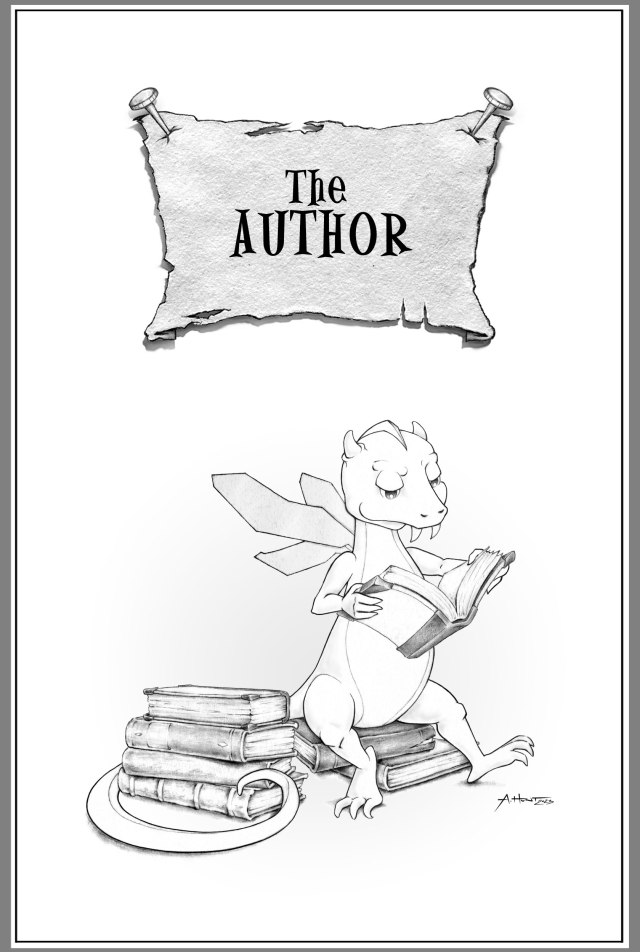
Art by Alison Hunt
(Just a quick note before we kick off the June posts that will be connected to Do I Need to Use a Dragon?, which will be out on July 4th. Everything will be excerpts from various sections. Just to give you a taste of what’s going to be in the book. Enjoy.)
Authors love to talk about process and how they came up with their creations, so plotting and pantsing come to the forefront quite often. It’s common for a person to bring up how they created something and somebody with an opposing style steps in to either criticize or declare how they work differently. This causes friction and an argument can develop because the two people end up thinking they are under attack. Thankfully, it isn’t common for the fight to devolve to such an extent, but be aware that wading into these waters can result in you getting pulled into a debate you didn’t see coming. You have to love the passion of authors when it comes to their own works and technique. That’s how you know the person is serious about their path and stories.
You can figure out what a plotter is from the word, which does seem a tiny bit insidious. This is why I sometimes use ‘planner’ instead. Well, that and I keep getting the words mixed up since they’re synonyms. A plotter will spend weeks, months, or years preparing for the moment they will write their story. They will spend hours researching whatever they might need. Character biographies, monster descriptions, plot synopses, outlines, calendars for other worlds, and all manner of material are created if needed. This is extra true for fantasy and science fiction authors who may have to create an entire world from scratch. A plotter will enter the writing phase with confidence and many times there will be a focus on continuity. You may work slower because you are repeatedly checking your notes to make sure you haven’t accidentally switched an eye color or used the wrong goblin type. With all of their planning, a plotter may feel that they don’t have to rewrite or severely edit because they have made sure all of the scenes and characters are essential. In their mind, they have effectively eliminated most of the extraneous stuff during this initial stage. The tension and anxiety many authors feel are used up during the planning, so they can be more relaxed.
Pantsers are fairly relaxed from the beginning. They may be nervous about where the story is going to go, but it comes with an excitement for the unknown. To be fair, it isn’t like they don’t plan anything at all. All pantsers I have talked to admit that they have an idea of where they want the story to go and what to do with the characters. They know what their heroes and villains look like for the most part too. So, it would be better to say they do minimal planning before diving right into the story. This grants them a freer style because they are letting their mind run with the concept. It can take longer to do this stage than it does for a plotter because one can run into a twist that leaves the story in a rough spot. This requires going back to rewrite or taking a moment to figure out where this will put everything. It’s like a pantser puts a jigsaw puzzle together after single look at the picture while the plotter needs to have the box cover on hand at all times.
There are flaws with both schools, so don’t go thinking one is better than the other.




 Legends of Windemere
For me, all that plotting takes the fun out of the writing. Why write at all if it’s already down on paper in various forms? I like not knowing where the little gray cells will take me!
LikeLike
My take on that is you can’t publish an outline and character bios. It’s like opening a jigsaw puzzle, dumping it on the table, and leaving it at that. I’d actually say the big difference is a planner would use the box cover as a guide while a pantser goes in effectively blind.
LikeLiked by 1 person
Good simile!
LikeLike
Yay! Is that the cover? Love it!
Great advice! Every author is different. And as you said, one isn’t better than the other. I’m more of a combination author. I plan some and then I start writing before I reach the end of the planning stage. That way I know in what direction I need to go with more plans. But one book I planned entirely, because i had to turn in an outline to an advisor. Yet even with that plan, some surprises happened to take the plot in a slightly different direction.
LikeLiked by 1 person
It’s actually one of the interior arts. I tend to be more planner than pantser. I still leave things open for surprises too. Can’t be too rigid.
LikeLiked by 2 people
It seems like a pretty balanced description to me.
LikeLike
Thanks.
LikeLike
I like your description of plotter and pantser. I’m a pantser, and I go with the story, although I do know where it is generally going, and (usually) the end.
I don’t think I have the patience to plan it all out in detail first. I would get bored and not write it at all. And, with the freedom of being a pantser, as new ideas pop into my head, I can incorporate them easily. Yes, it does sometimes mean going back and rewriting bits, but I find that fun.
I also like the way you call ‘plotters’ ‘planners’. Plotter does have a slightly different meaning.
LikeLike
I get the feeling that pantsers think plotters are writing out things to the minute detail. Some do, but most just lay out a general idea. I like this method, which allows for alterations as one goes, to doing full rewrites. That tends to make me lose the flow and walk away.
LikeLiked by 1 person
I realise that planners don’t write out everything. But some planners tell us that we should plan each scene.
Personally, I have a ‘plan’, but it’s not written. It’s in my head.
LikeLike
I think it comes down to how much you enjoy rewrites and editing. I hate that part, which is why I make a note of each scene’s purpose. I have a general idea of what I want it to do for the story even if I don’t have the specifics in mind.
LikeLiked by 1 person
I like it. I’ve done all of it now, even a combo. They all work, and they all snarl and insist on changes. Getting into the chair and working on it is key.
LikeLike
Definitely need that first step.
LikeLiked by 1 person