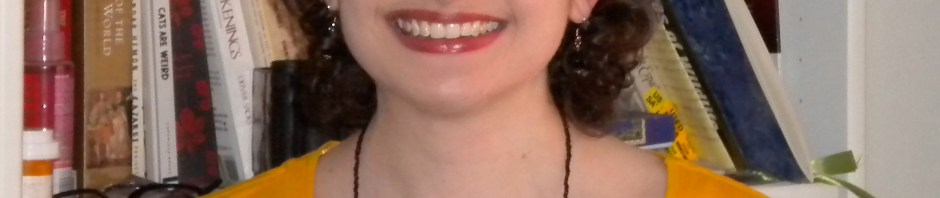
 Today’s Guest Blogger is the phenomenal Victoria Grefer from Creative Writing with the Crimson League. Her site is an excellent source of insight and information about the art of writing. She has published a fiction novel and is currently working on publishing a nonfiction handbook incorporating her ‘on writing’ blog posts. My questions to Victoria was:
Is there a difference in process between writing nonfiction and fiction? If so, what is the difference?
Without further ado, here is Victoria Grefer:
A Writer’s Approach to Fiction and Nonfiction. What’s Different?
Writing fiction versus nonfiction involves two very different processes; at least, this is the case where I’m concerned, both while I’m writing and while I’m planning to write.
Fiction-wise, I write fantasy, but I have a history as a grad student in Spanish literature, so the bulk of my nonfiction experience involves academic research projects, though I’m also working on a writer’s handbook based upon my blog posts. Of course, my blog itself also constitutes nonfiction (since I don’t use it to serialize my novels.)
I have always been of the opinion that no matter what you write, you should write for you. (This does not apply to writing you’re forced to do, such as a research paper for a required class you have no real interest in, but that scenario is, more or less, the exception to the rule.)
When I’m not writing to impress a professor, I write for me. That goes for fiction and nonfiction alike. The differences in my approach to writing fiction and nonfiction lie in the fact that I write fiction and nonfiction for different purposes.
I write fiction with no outline, as a general rule. I fly by the seat of my pants when I sit down to develop a novel, and that’s because I love the sense of adventure involved in being a “pantser.” I write fiction for the fun of it, so I treat it as a game and as a puzzle. What’s the next piece? I have an idea for this scene… does it fit here? Might it fit better later?
In contrast, I never treat nonfiction as a game. My nonfiction writing is always related to real life, and I approach it as I approach real life: in a more structured, organized manner.
For me, fiction is about the process of plot discovery. Nonfiction is about developing and supporting an argument. I outline nonfiction; that’s a carryover from my academic writing. I make sure to structure my argument with a logical progression of data. I make sure I explain myself in a clear and concise manner, to do my argument all justice.
An outline helps me figure out the best way to arrange that arrangement; that is, the arrangement that I feel makes my case the strongest and readers more likely to remember what I want them to remember.
Compared to nonfiction, I worry less about raising questions and causing the reader confusion in my fiction. In fact, sometimes I strive to raise questions in the minds of my fantasy readers, to create an atmosphere of suspense.
I make sure to provide answers to those questions in due course, but I feel novelists and readers have an unspoken pact that says, “The author is not obligated to address all issues and concerns the reader may have at the moment those concerns arise.”
The author is obligated to address them at some point, of course, and the tone and quality of the work should lead readers to expect an eventual resolution. But right then and there? Not necessarily.
My approach to nonfiction is different. A question on the part of my reader, in nonfiction, means a flaw in my argument or a counterclaim I need to address, and need to address immediately. Sometimes, all that means is assuring the reader, “We will get to this later, I promise. Don’t worry. Now’s not the right moment, but I understand this concern exists. I haven’t overlooked it, and it doesn’t invalidate the claims I’m making.” I don’t have to give my fantasy readers such explicit assurance.
One thing that doesn’t change, however, between my fiction and nonfiction is my personal style. I tend to prefer short, clear sentences. I say what I need to say without a lot of fluff, whether I’m narrating a novel or describing my approach to editing or why I love my beta readers.
My style is a reflection of who I am as a person and what I value when I’m reading. Those things don’t change when I switch from fiction and nonfiction. And that’s great, because it means my nonfiction will help make me a better writer of fiction, to some degree.
Can writing nonfiction improve my character development? Help me write dialogue? Not necessarily. But it can help me develop and define my personal style to a greater extent.
It’s nice to think the breaks I take from my novels to create some nonfiction pieces aren’t total wastes of time where my fiction is concerned.
So, now I curious: do you write both fiction and nonfiction? Do you have a different approach to each? How do you tackle things differently depending on what you’re writing?
Bio
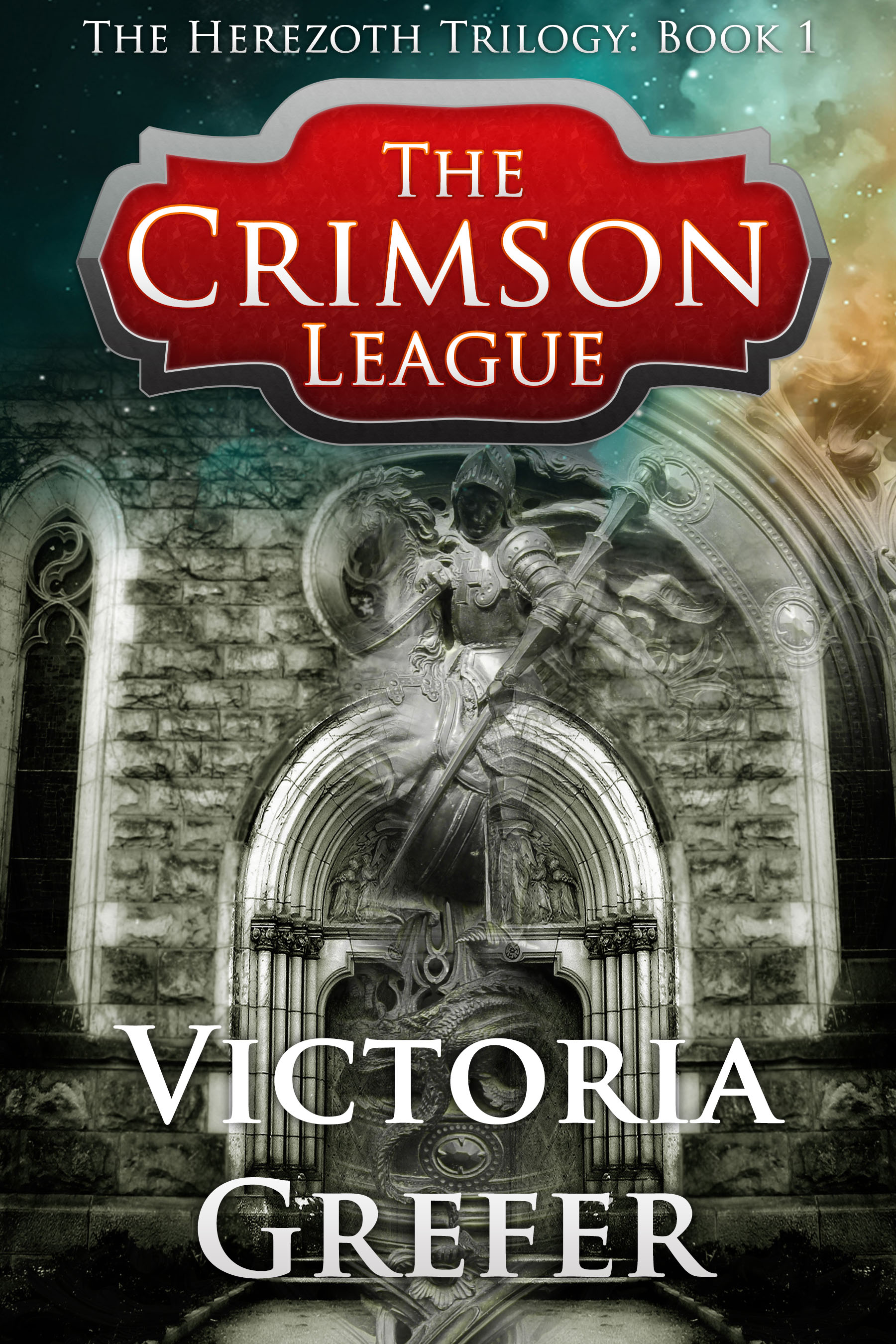 Victoria Grefer is from New Orleans, Louisiana. A lifelong student and avid reader, she has a bachelor’s degree in Spanish and English and a master’s degree in Spanish literature from the University of Alabama. She has taught Spanish and tutored, and now is establishing herself as a freelance translator and perhaps editor as well. She is the author of the Herezoth trilogy, sword and sorcery fantasy beginning with The Crimson League and ending May 31, 2013 with The King’s Sons. She blogs daily about creative writing and marketing fiction at www.crimsonleague.com.
She is soon to release a writer’s handbook entitled Writing for You: A Novelist’s Guide to the Craft of Fiction, addressing aspects not only of mechanics and style, but the emotional barriers that can impede aspiring writers (and even experienced ones) from making progress with their work. You can keep up with her on twitter (@vgrefer) and facebook (https://www.facebook.com/greferauthor)




 Legends of Windemere
Yes, i follow her blog religiously, shes quite insightful ! Charles, Sir on this note, do you think you could do a write up to help newbies on query letters, i’m stuck in a rabbit hole with no light in sight. Or you could just guide me, Thank you !
LikeLike
I’d love to, but I’m actually really bad at query letters. I went the self-publishing route after 10 years of failed submissions. It’d be the equivalent of an infant teaching someone how to swim.
The only thing I can suggest is a book called ‘The Writer’s Market’. It has information on how to write a query letter among other things.
LikeLike
Oh its a universal thing then 🙂 ah, relief. Knowing that everyones equally afraid if it is my light ! Ok, on it. Have a wonderful evening and thank you for writing 🙂
LikeLike
You’re welcome. Enjoy being one of us who looks at a query letter like a life-threatening Calculus test. 😀
What could help is writing the meat of the query letter and posting it on your blog for feedback. Maybe just the book plug and your bio to see if people have suggestions.
LikeLike
Sounds good ! That’s what i’m going to do. 🙂
LikeLike
Query letters are so horrible! I’ve read up on how to write one through the Idiot’s Guide to Publishing, and I still can’t manage it. That might be another resource for you.
LikeLike
thanks so much for you support! 🙂 I’m thrilled you enjoy my blog and that you stop by Charles’s as well. His has taught me a lot.
LikeLike
That book cover is awesome! I love it. Great post, too.
LikeLike
thanks! My cover designer is Brad Covey. He’s really talented. You can connect with him at https://www.facebook.com/bradcoveyofficial?fref=ts
LikeLike
I enjoyed this guest post Charles…my only published material was a training manual. In writing it I found it was more or less piecing together a puzzle of information to make it a clear and concise picture. I was able to knock off the 60 page manual in about 8 hours in a bar sifting over all the material I was provided and swilling beer. I found non-fiction was merely re-wording and organizing of existing information and the only reward I really got from it was the 40 hours at the scale of double time for my efforts. My efforts to write fiction have always led to failure because all the pieces of the puzzle aren’t always available. I would say though the most important thing someone could take from non fiction writing and apply to fictional writing is the research. Often fiction writers will ignore this crucial element. Weaving actual fact through a tale no matter how far fetched adds to the realism of a piece. Nothing irks me more than a piece of writing that has failed to do its due diligence. Especially in movie scripts, for example I saw a movie a little while ago in the fantasy genre set in modern day resurrection of a weather god or something, but the script was so full of errors for example the general had sergeant stripes on his arm and 2nd lieutenant bars on his epilates. despite this I watched about one hour of this movie and was astounded by the absurdity of this script… a general with sergeant stripes making presidential decisions, a general doesn’t approve the use of nukes. So I would non fiction is an important element to fiction writing that is often overlooked.
LikeLike
Movies are horrible with details sometimes. As an author, you can get away with not knowing that by playing cheap and not mentioning the stripes. Still, one has to do research even with fantasy. I’ve had to look into some many medieval weapons, monster lore, geography, and various sciences to make sure I’m doing things right. Even with fight scenes, I move my arms (and sometimes legs) to make sure the character’s body is moving naturally. One thing that drives me nuts is in a fight scene where it’s all strikes that miss with no dodges or blocks. It’s like the characters wildly swinging their weapons around until one of the gets a lucky hit. Maybe I’m too picky on this one.
LikeLike
speaking about fight scenes… the little sparing scenario you wrote that I read the other day kind of inspired me to try my hand at the fantasy genre and I wrote a little more than a thousand words last night… No need to worry,,, no competition here as it will probably end up where 99% of my prose end up… filed under G for garbage… but I wanted to thank you for the inspiration and if it develops into anything I will share it with you…
LikeLike
You’re welcome. You could always submit it to Community Storyboard and get some feedback. 😉 I’m sure it’s not garbage.
One rule of combat scenes: Never forget the injuries of your characters. Luke breaks some ribs, he’s going to be feeling the pain and have to work harder. This is one of my biggest pet peeves, especially the over-used ‘immune to groin shot’ move. Ugh. I hate that when it doesn’t make any sense.
LikeLike
cracked a rib about a year and a half ago sparring with someone 20 years my junior and I can tell you it hurt to laugh, cough, or move suddenly for about 3 weeks… and I hear you and no immune to groin shots here… if someone gets kicked in the codpiece they’re going down in a crumpled heap…
LikeLike
I tore up my shoulder during a fencing tournament. Ignored it and used adrenaline to keep going. I was able to move and keep up to 75% of my usual pace, but my arm was useless afterwards. I mean, I needed a sling and physical therapy to fix it. So, I’m very careful about injuries on characters and long-term effects. Healing magic gives me an out, but I still occasionally have scars and weakness remain after the healing.
What kind of sparring were you doing?
LikeLike
the drunken kind of sparring where inflated egos come into play… grappling moves and counters… we even toyed with the idea of taping up blades and going at it… but it all ended when we destroyed my friends apartment and in one take down and counter I cracked my rib and he split his lip wide open… it’s a good thing we never taped up those blades…
LikeLike
Ouch. Definitely a smart move on not taping up those blades.
LikeLike
Fabulous, fabulous point about research! It indeed is often overlooked, though it’s absolutely vital. Those examples you give are just crazy!
LikeLike
I love Victoria’s blog. You can learn a lot from this smart lady!
LikeLike
Pingback: The Herezoth Trilogy is finally complete! Start your weekend with a sword and sorcery giveaway. | Creative Writing with the Crimson League | Hey Sweetheart, Get Me Rewrite!
Pingback: Welcome to a new friend: Victoria Grefer– Creative Writing with the Crimson League | Hey Sweetheart, Get Me Rewrite!