
Many people have heard about the thylacine or Tasmanian Tiger. Others have not, so I think a post on it will be helpful. Now, what happened to the thylacine?
On mainland Australia, the thylacine went extinct about 3,500 years ago due to environmental change, increased human activity, and increased dingo populations. It survived on the island of Tasmania until the 1930’s. While only around 5,000 thylacines estimated to be alive, farmers blamed them for the deaths of sheep. So, bounties were put on their heads. This was made worse when a picture was released of a thylacine with a chicken to create more anger. In reality, the picture was cut down to hide the fact that the animal in question lived in captivity. The appearance of humans also introduced a few diseases.
Before everyone jumps onto human activity as the sole reason, there was a study done that showed the thylacine was in trouble long before us. They suffered from a severe decline in genetic diversity nearly 100,000 years ago. This became increasingly worse as time went on, which is why only 5,000 were alive by the time humans showed up with dogs, diseases, and farming. While humans hastened their extinction, they were heading that way and all attempts to save them failed. The low genetic diversity may have been a reason why zoo breeding programs never worked.
All of this has made the thylacine a prime candidate for cloning to revive the species and reintroduce it to the wild. Unlike mammoths and dinosaurs, they did exist in our modern world and would be able to more easily acclimate.
Some thylacine facts:
- It is a marsupial, which means it has a pouch for its litter.
- Both sexes had a pouch. The female’s used theirs for carrying joeys while the males used it to protect their external reproductive organs.
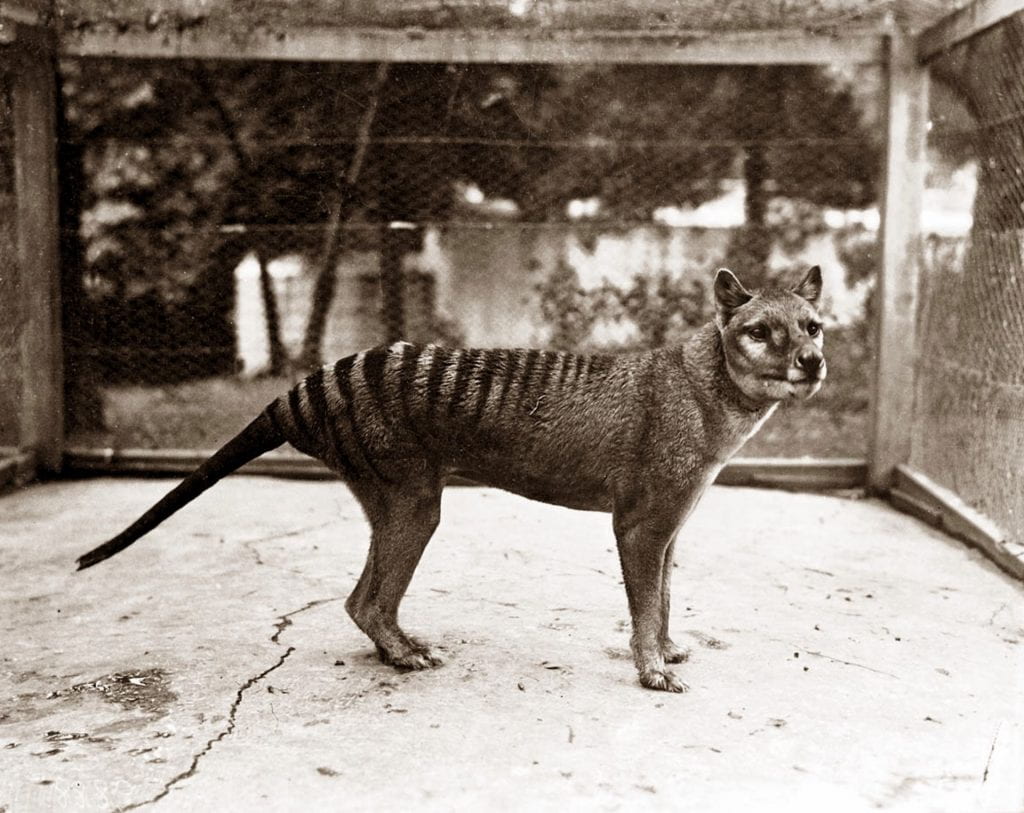
- The last known thylacine died in 1936 at the Hobart Zoo in Tasmania.
- They would hop on their hind legs when scared and had trouble running at high speeds, which made them easy targets for hunters.
- Thylacines were more than likely solitary ambush predators.
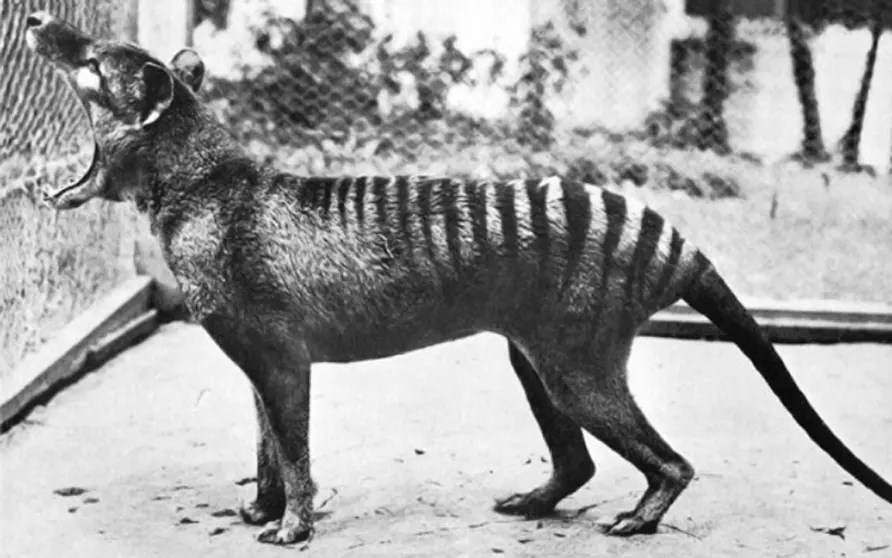
- They could open their mouths 80 degrees, but had weak bite strength.
- There are still sightings today, but nothing verified.
Thankfully, there are pictures and even video of the thylacine:






 Legends of Windemere
It is sad how much we’ve lost, and we are still losing species.
LikeLike
We usually realize the tragedy after the point of no return.
LikeLiked by 1 person
So sad for any creature to be lonely last in a zoo. Interesting that it was already in decline. Other species probably have disappeared in the recent past, not just dinosaurs, without human interference.
LikeLike
Apparently mammoths and other ice age animals went extinct without our help.
LikeLiked by 1 person
Wow! That mouth.
The question arises as to whether we should try to revive species that were on their way to extinction, anyway.
It does make me sad to see animals in bare cages. Concrete floors and nothing to do. But I suppose in the 30s we didn’t know as much as we do now. I still get cross, though.
LikeLike
I think that was still fairly common in the 80’s too. I remember the Bronx Zoo having a lot cages for their big cats until maybe the 90’s when they got bigger, real habitats.
I’ve read how reviving certain species can help heal the planet. For example, wooly mammoths could help reverse climate change.
LikeLiked by 1 person
Yes. I heard that, too. But would they survive with human development?
LikeLike
I think they would be put in areas away from human development. Articles said the Arctic would be the best choice since that was part of their original territory.
LikeLiked by 1 person
This is fascinating. If the animal is cloned and returned to the wild, the balance of nature should return. That happened when wolves were reintroduced to Yellowstone.
LikeLike
Be interesting to see if happen with mammoths.
LikeLiked by 1 person
Yes, it would!
LikeLike
What a cool creature, and a loss to us all.
LikeLike
True. Be nice to hear they’re just a small population in hiding now.
LikeLiked by 1 person