
This threw me off because it’s been years since I heard of numbats. Spellchecker doesn’t even think it’s a word. I believe I last heard of them when I was kid watching animal shows too. So, what is a numbat?
This marsupial is found in Australia and also called the banded anteater. They are only 14-18 inches long and resemble squirrels with their long bodies and bushy tails. Numbats are diurnal (active during the day) and only eat termites, which is why habitat loss is a problem for them. Let’s get to the conservation thing before a fact list though.
Numbats are endangered with their biggest threat being invasive species of red fox and feral cats. Europeans released the red fox on purpose, which destroyed nearly all of the populations. Only two populations survived in areas with a lot of hollow logs for them to hide in, but there were less than 1,000 wild numbats. In 1980, an extensive breeding and research program began, which led to reintroductions to fenced off/fox and cat free areas. A plus of the numbat is that it is easily reintroduced to areas it previously thrived in as long predators are reduced or not present. So, it is still endangered, but making a slow recovery.
Some facts:
- While a marsupial, numbats do not have pouches for babies. Instead, they have some protection around their teats for their litter of 4 to feed on as they finish maturing.
- A single numbat can eat 20,000 termites a day.
- Their tongues are half the length of their body.
- Instead of teeth, they have blunt pegs to crush insects.
- All of their water is gained from eating termites.
- Similar to wombats, a numbat will protect its burrow by blocking the entrance with its butt.
- Gestation is only 14 days and the young are born underdeveloped.
- Numbats are the faunal state emblem of Western Australia.
- Being solitary, small, and not very fond of traps, they are difficult to locate and get clear population counts. Only recent technological advancements in remote cameras have helped in figuring out their numbers.
Picture and video time!
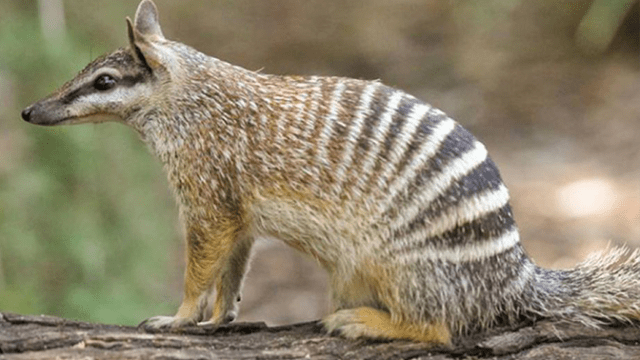
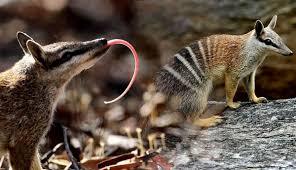
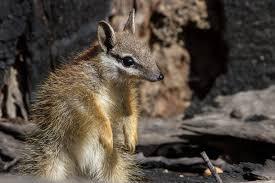
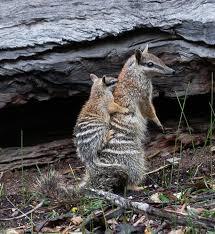





 Legends of Windemere
My relatives in Western Australia keep their cats firmly inside, as it’s now strongly disapproved of to let them roam killing native birds and other wildlife and foxes are seen as the enemy.
LikeLike
Cats, dogs, and foxes seem to show up in a lot invasive predators stories. Surprised about the third, but I think I read that they were usually brought over to create a ‘fox hunting’ area. Makes it even worse.
LikeLiked by 2 people
Yes they were brought over just so they could do fox hunting.
LikeLike
These guys are pretty cool. Sounds like they need some better predator control down there.
LikeLike
Think a lot of colonized regions require predator control. All of the problems are from species introduced by humans long ago.
LikeLiked by 1 person
I think they are pretty awesome. The University of California at Irvine has Myrmecophaga tridactyla as its mascot. Three toed giant anteater!
LikeLike
Very cool.
LikeLiked by 1 person
I’m so glad they are making a comeback where preditors are under control.
LikeLike
Same here.
LikeLiked by 1 person
😊
LikeLike
Such a cute animal. I’ve not heard of them before. Such a pity that cats and foxes are endangering them. I don’t suppose they can control cats, as they are pets, but an attempt could be made to exterminate the foxes, surely. Although I suppose it would be a massive job. Probably too costly. (But how costly in non-financial terms is not doing so?)
I don’t like foxes. Here in the UK many people think they are cute and encourage them, even feeding them. But they are town folk and haven’t experienced the devastating killing sprees of foxes on poultry, or even young lambs.
And they carry mange which can be passed to cats and dogs, as well as their stink!
Do people encourage them in Australia, I wonder?
LikeLike
They’ve created sanctuary areas where predators like cats and foxes are kept out. Numbats don’t really live among humans, so they can be cordoned off.
Not sure if people encourage them. We have wild foxes all over the place. Don’t seem to be a nuisance. Coyotes can get pretty bad.
LikeLiked by 1 person
All of their water is gained from eating termites? They could live in a desert with no water, only termites. I’m glad they’re making a comeback. Shame on the UK for bringing in foxes. Upsetting the natural balance of nature is never a good thing.
LikeLike
It is interesting how they get water solely from food. Think the same goes for koalas.
LikeLiked by 1 person
Ah ha!
LikeLike
I really thought this was going to be another cryptid! They sure are cute, though.
LikeLike
Thanks. The name does sound like a fictional creature.
LikeLiked by 1 person